- 15+ YEARS OF EXPERIENCE
Air Purification System in Austin, TX
Austin’s trusted air purification system specialists. Schedule your service today and enjoy cleaner indoor air, reduced allergens and airborne contaminants, improved HVAC performance, and a healthier, more comfortable home environment year-round.
- 1000+ Google Reviews
- Certified Technicians
- Same-Day Availability
- 15+ Years of Experience
Austin's Trusted Air Purification Experts — Clean Air You Can Actually Feel
If you live in Austin, you already know the air outside isn’t always clean. Cedar pollen in winter. Ozone alerts in summer. Wildfire smoke drifting in from the west. Construction dust from the fastest-growing metro in the country. And that’s just what’s happening outside your front door.
What most homeowners don’t realize is that indoor air can be two to five times more polluted than the air outside — even in a city with air quality challenges like Austin. Your home traps pollen, dust, pet dander, mold spores, volatile organic compounds (VOCs) from paints and furniture, and the byproducts of everyday cooking and cleaning. Your HVAC system’s standard filter catches some of it. Most of it recirculates through your home, day after day, season after season.
At Supreme Air Austin, we’ve been helping Austin homeowners breathe cleaner air since 2010. We don’t sell gadgets. We assess your home’s air quality challenges, your HVAC system’s capabilities, and your family’s specific needs — then we recommend and install air purification systems that actually make a measurable difference.
Why Austin Homes Need Air Purification More Than Ever
Austin has always had air quality challenges. In recent years, those challenges have intensified — and they’re not going away.
Cedar Fever: The Winter Air Quality Crisis
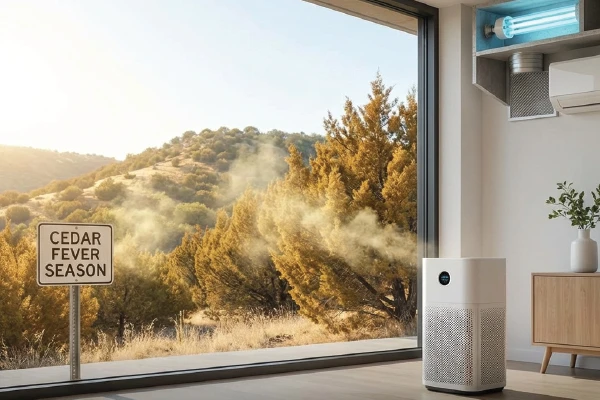
Every December through February, Austin becomes one of the most allergically hostile cities in the world. Mountain Cedar pollen levels here are unmatched globally. If you or anyone in your home suffers from allergies, you know the symptoms: sinus pressure, itchy eyes, fatigue, respiratory irritation. Standard HVAC filters capture some cedar pollen, but much of it passes through and recirculates.
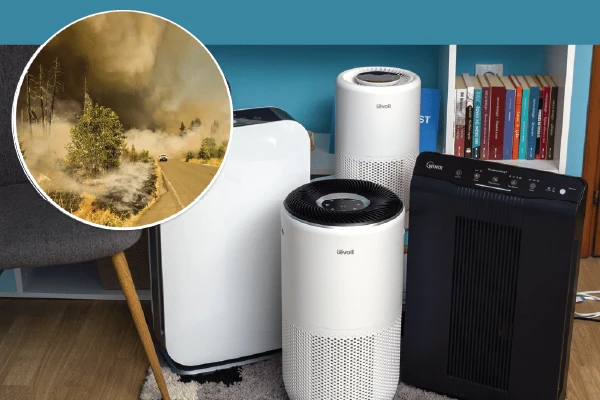
Wildfire Smoke and Regional Haze
In recent years, wildfire smoke from Texas, the western U.S., and even Canada has reached Austin with increasing frequency. Smoke particulate — particularly PM2.5 (particles 2.5 microns or smaller) — penetrates standard filters easily. These particles are small enough to enter your bloodstream through your lungs. Whole-house air purifiers with high-MERV or HEPA filtration are the most effective defense for your home during smoke events.
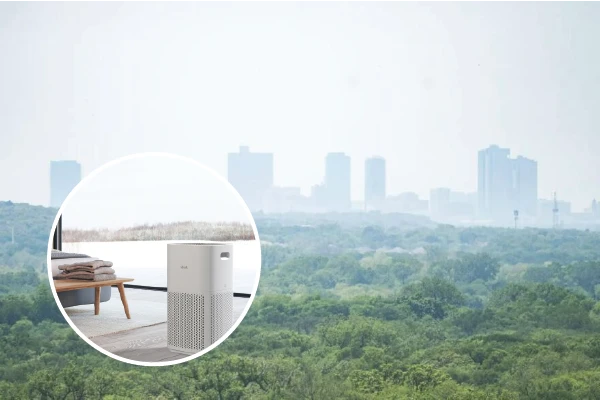
Ozone and Urban Pollution
Austin regularly experiences ozone action days during summer. While ozone itself is a gas and requires different filtration than particulate, the conditions that create ozone — heat, sunlight, and precursor pollutants — also concentrate other airborne contaminants. Traffic on I-35, MoPac, and 183 contributes to a persistent baseline of particulate and VOCs that finds its way indoors.
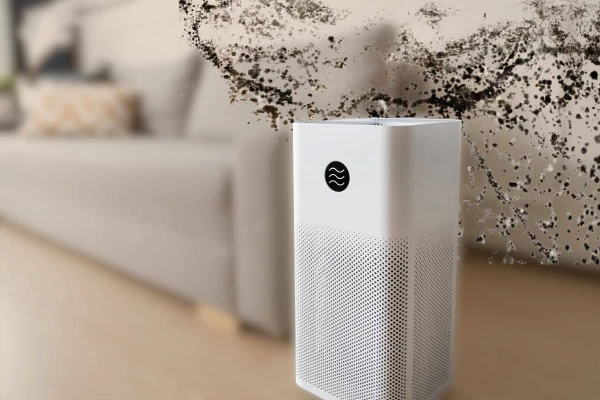
Mold and Humidity
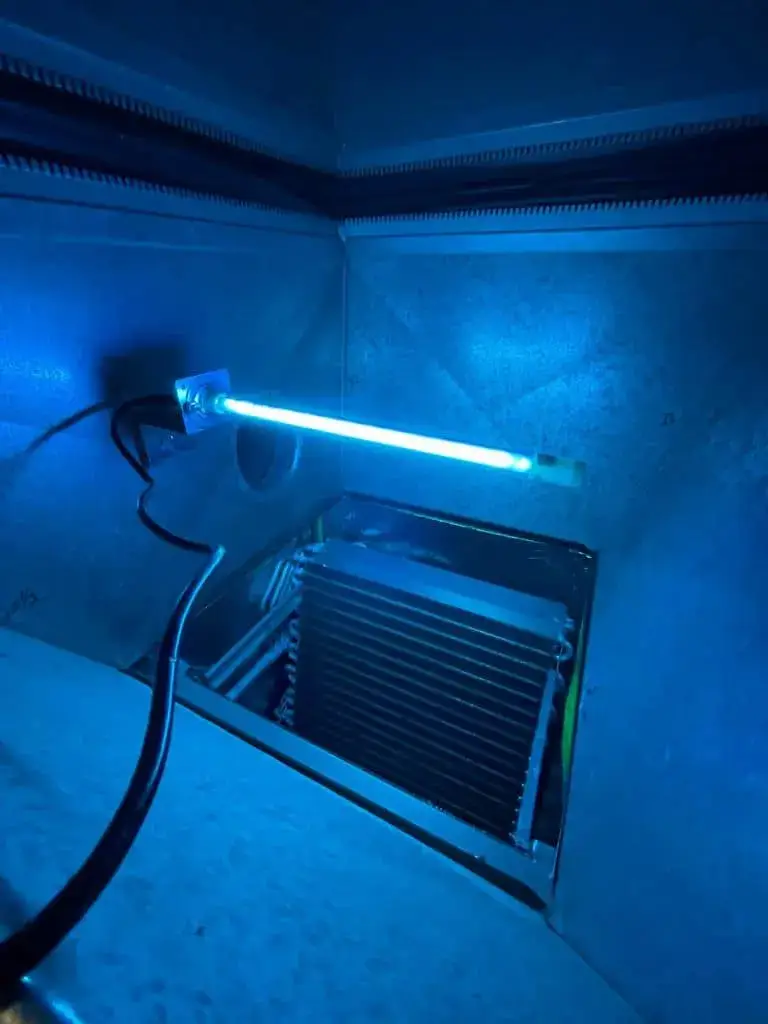
Austin summers are humid. When humidity exceeds 60% indoors, mold growth accelerates. Mold spores circulate through your HVAC system, and standard filters don't catch them reliably. Air purifiers with UV-C or PCO (photocatalytic oxidation) technology neutralize mold spores and other biological contaminants before they colonize your ductwork or living spaces.
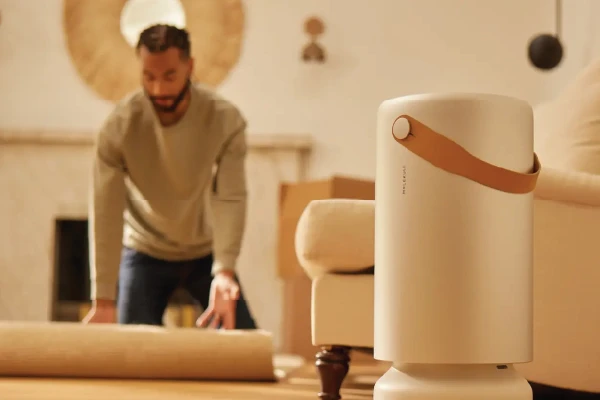
New Construction & Renovation
Austin's growth means new homes, new apartments, and constant renovation. New construction materials — flooring, adhesives, paints, cabinets — off-gas formaldehyde, benzene, and other VOCs for months or years. If you live in a home built or renovated in the last five years, you're likely breathing elevated VOC levels. Activated carbon filtration is the standard solution for chemical and odor removal.
Pet Dander and Indoor Bio-Burden
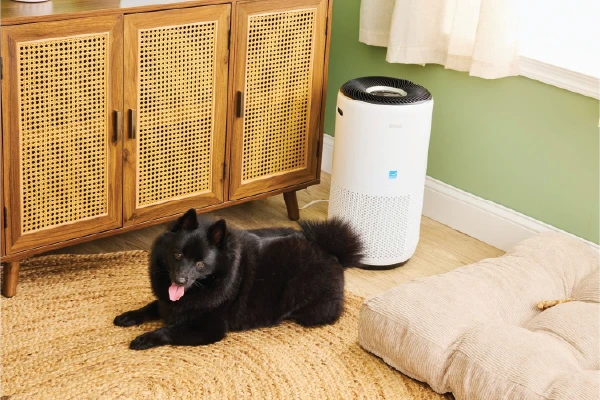
Austin is a pet-friendly city. Dogs, cats, and the dander they produce are among the most persistent indoor allergens. Dander particles are small, light, and remain airborne for hours. They pass through standard filters and accumulate in upholstery, carpets, and ductwork. Air purification reduces the active bio-burden in your air, which means less accumulation in your home's surfaces.
Whole-House vs. Portable Air Purifiers: What Austin Homeowners Should Know
Whole-House Air Purifiers
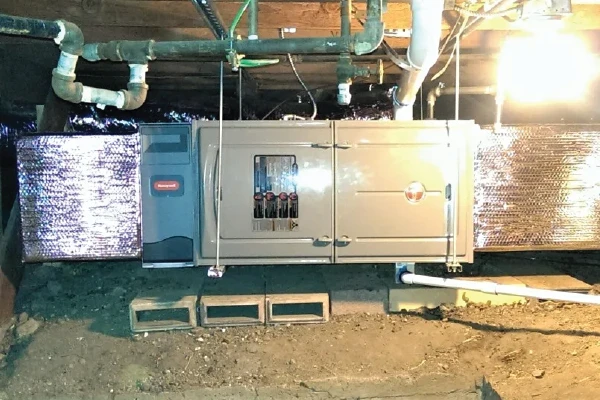
These systems integrate directly with your central HVAC system. They treat every cubic foot of air that passes through your ducts — which means every room in your home receives filtered air, provided the HVAC is running.
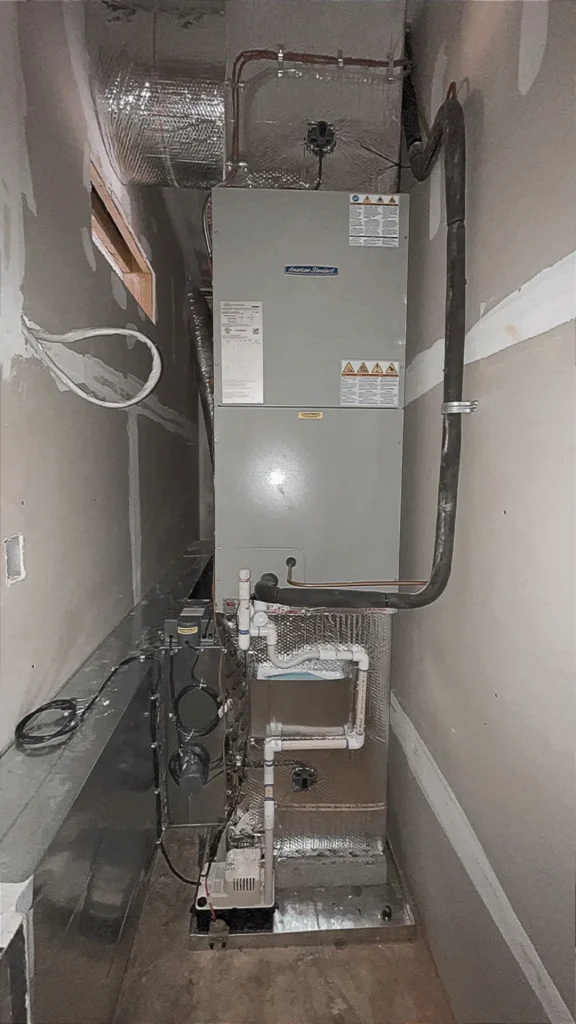
How they work: Whole-house units mount in your return air duct or at the air handler. As air is drawn back to the system for conditioning, it passes through high-efficiency filtration, UV light, or other purification media before being distributed through the supply ducts.
Best for: Homeowners who want consistent air quality throughout the entire house without managing multiple devices. Homes with central HVAC systems in good working order. Families with allergies, asthma, or respiratory sensitivities affecting multiple members.
The honest limitation: Whole-house systems only work when your HVAC blower is running. In mild weather when the system is off, air isn’t circulating through the purifier. We often recommend pairing a whole-house system with a continuous fan setting or a smart thermostat schedule that maintains minimum airflow.
Portable Air Purifiers
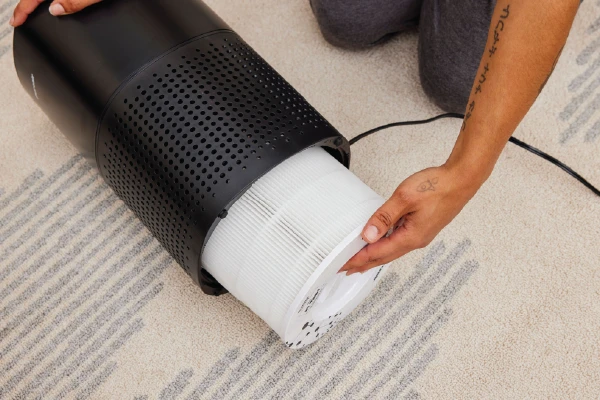
These are standalone units that plug into a wall outlet and clean the air in a single room or zone.
How they work: A fan draws room air through a filtration cartridge — typically a pre-filter, HEPA filter, and activated carbon layer — and releases cleaned air back into the room.
Best for: Targeting specific problem areas: a nursery, a home office, a bedroom for someone with severe allergies, or a room where pets spend the most time. Renters who can’t modify HVAC systems. Supplementing whole-house systems in high-priority rooms.
The honest limitation: Portables only clean the room they’re in. They don’t address ductwork contamination, and they require regular filter changes that homeowners often forget. A portable unit in the living room does nothing for the air in your bedroom at the other end of the house.
Not sure which approach fits your home? We’ll evaluate your HVAC system, your floor plan, and your family’s needs. Call (512) 277-9782
Our Air Purification System Installation Process
We don’t sell boxes. We install systems that are properly sized, correctly integrated, and fully operational before we leave.
Indoor Air Quality Assessment
We start with your home. We inspect your HVAC system, check current filter type and condition, assess ductwork cleanliness, and discuss your symptoms: allergies, odors, dust accumulation, respiratory issues. If you've had recent construction, water damage, or pest issues, we factor that in.
System Recommendation and Sizing
Based on the assessment, we recommend specific equipment. We calculate your home's cubic footage, airflow volume, and the contaminant profile we've identified. We explain why we're recommending HEPA vs. carbon vs. UV — and we tell you honestly if your home needs one technology or a combination.
HVAC Compatibility Check
Before installing any whole-house system, we verify that your air handler can handle the additional static pressure of advanced filtration. If your blower is undersized or aging, we discuss that upfront. Installing a restrictive filter on a weak blower creates more problems than it solves.
Professional Installation
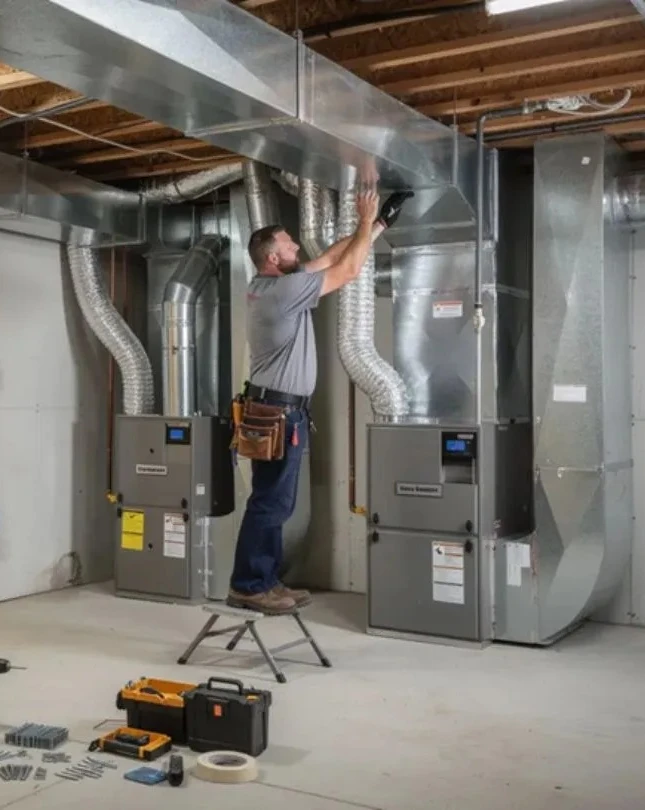
Our technicians install whole-house systems according to manufacturer specifications and NADCA best practices. We seal duct connections, verify electrical requirements for UV and PCO units, and ensure proper orientation of media filters.
System Testing and Calibration
We test airflow before and after installation to confirm the system isn't restricting your HVAC performance. We verify UV lamp intensity, check carbon media seating, and run the system through a full cycle to ensure integration is seamless.
Owner Education and Maintenance
We show you how the system works, what maintenance it requires, and how often filters or lamps need replacement. We offer maintenance plans for Austin homeowners who prefer to have us handle filter changes and lamp replacements on schedule.
Need an estimate for your building size? Call (512) 277-9782 for transparent, upfront commercial pricing.
Signs Your Austin Home Needs an Air Purification System
Your home and your body will tell you when the air isn’t clean enough.
- Allergy symptoms that persist indoors. If you sneeze, cough, or have sinus pressure even when windows are closed and the HVAC is running, your filtration isn’t catching what’s in your air.
- Dust that returns within days of cleaning. A thin film on furniture two days after dusting means your air is actively distributing particulate.
- Musty or stale odors that don’t go away. Persistent odors indicate biological or chemical contaminants circulating through your system.
- Family members with worsening asthma or respiratory issues. Particularly during Austin’s cedar season or summer ozone months.
- You have pets and visible pet hair or dander. Even with regular grooming, pet dander is microscopic and remains airborne for hours.
- Recent construction, renovation, or new furniture. Off-gassing from building materials and furnishings elevates VOC levels for months.
- Visible mold or a history of water damage. Mold spores circulate through HVAC systems and colonize new areas.
- You live near a major road, construction zone, or industrial area. Traffic particulate and construction dust enter homes constantly through infiltration.
- Your home is more than 20 years old and has never had an air quality upgrade. Older homes often have accumulated contaminants in ductwork and porous materials.
How Air Purification Helps During Austin's Worst Air Quality Events
Cedar Fever Season (December–February)
Mountain Cedar pollen is large (20–30 microns) but incredibly allergenic. During peak season, outdoor pollen counts exceed 20,000 grains per cubic meter. Even with windows closed, pollen enters through doors, gaps, and ventilation. HEPA filtration captures cedar pollen effectively, reducing indoor concentrations by 90% or more. For allergy sufferers, this is the difference between functional and miserable.
Spring Oak and Grass Pollen (March–May)
Summer Ozone and Heat (June–September)
High ozone days trigger respiratory symptoms even in healthy individuals. While ozone is a gas and requires carbon or PCO filtration, the particulate load during summer — dust, vehicle emissions, industrial output — is also elevated. Combined filtration strategies keep indoor air safer during outdoor air quality alerts.
Wildfire Smoke Events (Variable, Increasing)
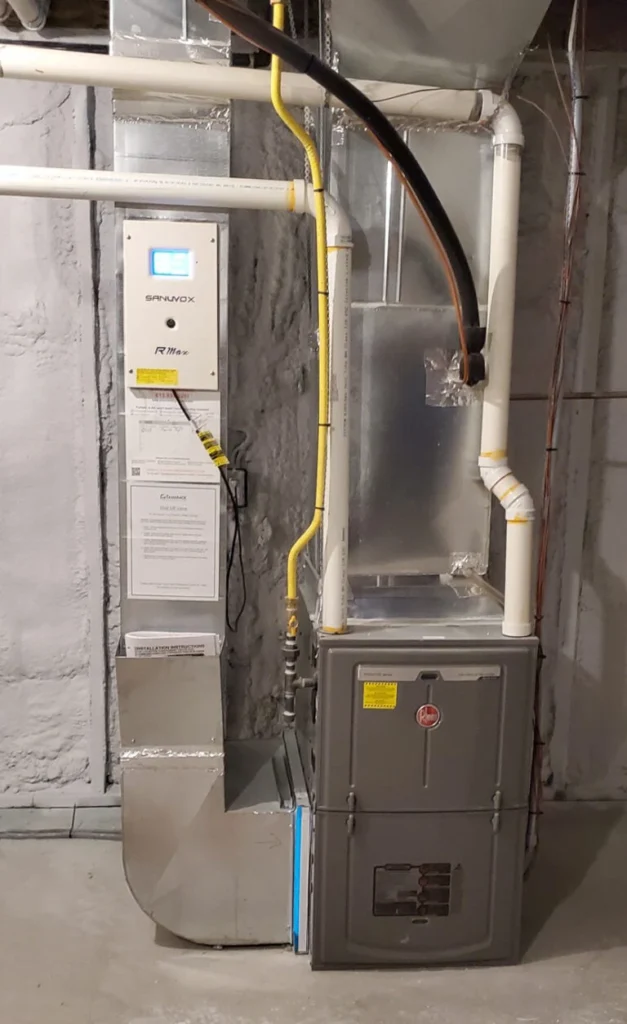
When wildfire smoke reaches Austin, PM2.5 levels spike. These particles are small enough to penetrate deep into lung tissue. Standard HVAC filters (MERV 8–10) catch some but not enough. HEPA-level whole-house filtration is the most effective residential defense during smoke events.
Commercial Air Purification for Austin Businesses
Clean air isn’t just a residential concern. Austin businesses — offices, medical practices, restaurants, schools, and retail spaces — face the same airborne contaminants, often at higher concentrations due to occupancy and activity levels.
Office Buildings and Coworking Spaces
High occupancy means high CO2, high bio-burden, and high particulate loads from printing, cleaning, and traffic. Whole-building air purification reduces sick days, improves cognitive performance (studies link CO2 and VOC levels to reduced focus), and creates a more professional environment.
Medical and Dental Offices
Restaurants and Food Service
Cooking generates grease, smoke, and odor particles. While hood systems handle kitchen exhaust, dining areas and bar spaces need dedicated air purification for patron comfort. Carbon filtration addresses odors; HEPA handles particulate.
Schools and Daycare Facilities
Children are more susceptible to airborne contaminants. We work with Austin-area private schools and daycares to install systems that reduce absenteeism and create healthier learning environments.
Fitness Centers and Gyms
High respiration rates mean high airborne particle generation. Gyms also generate dust from flooring, equipment, and chalk. Air purification is essential for member comfort and retention.
Neighborhoods and Areas We Serve Across Austin
We install and service air purification systems throughout the greater Austin metro. Our technicians are stationed across Central Texas for responsive scheduling.
Central & South Austin
North & Northwest Austin
East & Northeast Austin
West Austin & Hill Country
South & Southwest Austin
Cedar Park & Leander
Georgetown
Historic and new developments with varying indoor air quality challenges.
Frequently Asked Questions About Air Purification in Austin
1. How much does a whole-house air purification system cost in Austin?
Whole-house systems typically range from $800 to $3,500 installed, depending on the technology and your HVAC system’s compatibility.
- Basic media filtration upgrade (high-MERV): $200–$500
- UV-C coil and duct systems: $600–$1,500
- HEPA bypass systems: $1,500–$3,000
- PCO or combination systems: $2,000–$3,500+
2. Will an air purifier eliminate all allergens in my home?
No system eliminates 100% of allergens instantly. A properly sized whole-house air purifier significantly reduces airborne allergen concentrations — often by 85–95% — but allergens also settle on surfaces, upholstery, and carpets. Air purification works best when combined with regular cleaning, duct maintenance, and source control (pet grooming, humidity management).
3. Do air purifiers use a lot of electricity?
Most whole-house systems add minimal electrical load — typically 20–60 watts for UV systems, comparable to a light bulb. HEPA bypass fans use more, but modern units are energy-efficient. The cost is usually offset by reduced HVAC runtime due to cleaner coils and more efficient airflow.
4. How often do filters and UV lamps need replacement?
- HEPA filters: Every 12–24 months, depending on air quality and runtime.
- Carbon media: Every 6–12 months, as carbon becomes saturated.
- UV-C lamps: Every 12 months. The lamps still glow after 12 months, but UV intensity degrades significantly and must be replaced to maintain effectiveness.
- Pre-filters: Every 3–6 months.
We offer maintenance plans to handle replacements on schedule.
5. Can I install a whole-house air purifier myself?
We don’t recommend it. Ductwork modifications require knowledge of HVAC airflow, static pressure, and electrical safety. Improper installation can restrict airflow, damage your blower motor, or create duct leaks. Our technicians are trained to integrate systems without compromising your existing HVAC performance.
6. Will an air purifier help with Austin's cedar pollen?
Yes — significantly. HEPA filtration is highly effective against cedar pollen due to the particle size. Whole-house HEPA systems reduce indoor pollen concentrations dramatically during cedar season. Many of our customers report reduced allergy medication dependence after installation.
7. Do air purifiers help with wildfire smoke?
Yes. Wildfire smoke particulate (PM2.5 and PM10) is well within HEPA capture range. During smoke events, a whole-house HEPA system with sealed ductwork is the most effective residential defense. We also recommend upgrading to the highest MERV filter your system can handle during smoke season.
8. What's the difference between a filter and an air purifier?
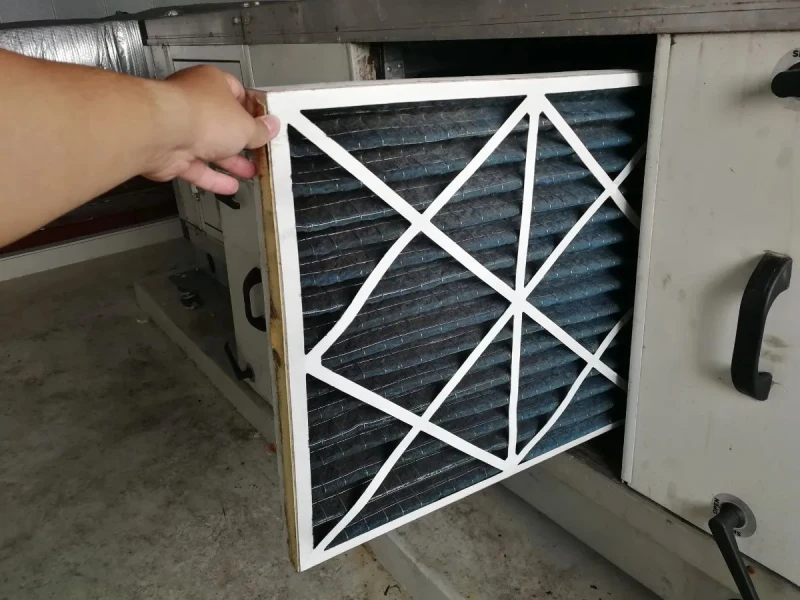
Your HVAC system’s standard filter protects the equipment from large dust particles. An air purifier is a dedicated system designed to clean the air you breathe — capturing smaller particles, neutralizing biological contaminants, or adsorbing gases. Think of it as the difference between a screen door and a security system.
9. Can air purifiers help with mold in my home?
Air purifiers with UV-C or PCO technology neutralize mold spores in the airstream, reducing the likelihood of new colonization. However, air purifiers do not remove existing mold growth. If you have active mold, you need remediation first, then air purification to prevent recurrence.
10. Are UV air purifiers safe?
11. Do air purifiers make noise?
12. Should I get an air purifier if I already have my ducts cleaned?
13. How do I know if my current HVAC filter is enough?
Standard 1-inch fiberglass filters (MERV 1–4) catch large dust and hair but miss most allergens and fine particulate. Pleated filters (MERV 8–13) catch more but may restrict airflow in older systems. We assess your current filter, blower capacity, and air quality goals to recommend the right approach.
14. Can air purifiers reduce cooking odors?
15. Do you offer same-day installation?
For standard UV and media filtration systems, we often can install same-day or next-day based on inventory and scheduling. Custom HEPA bypass systems may require a return visit for fabrication. Call (512) 277-9782 for current availability.
16. Is there a best time of year to install an air purifier in Austin?
Ideally, before cedar season (late fall) or before summer ozone months. But any time is better than never. If you’re currently suffering from allergies, smoke, or odor issues, waiting for the “right season” means continuing to breathe contaminated air.
17. Will an air purifier increase my HVAC maintenance needs?
18. How do I choose between all the technologies you offer?
You don’t have to figure it out alone. We assess your home, discuss your symptoms and concerns, and recommend the technology or combination that addresses your specific situation. We don’t upsell — we solve problems. If a simple media upgrade is sufficient, we’ll tell you.
About Supreme Air Austin Air Quality Services
Supreme Air Austin is a locally-owned company serving Austin, Texas and surrounding communities since 2010. We started in air duct cleaning, expanded into attic insulation, and added air purification because our customers kept asking for help with the air they breathe every day.
We’re not a national franchise. We’re not a call center. We’re Austin locals who deal with the same cedar pollen, summer heat, and wildfire smoke you do. We install systems that work in Austin’s specific conditions — not generic equipment pushed by out-of-state sales teams.
With 1000+ five-star Google reviews and 15+ years of experience, we’ve improved indoor air quality in homes and businesses from downtown lofts to suburban family homes, from medical offices to restaurants.
Every air purification job includes:
- Honest technology recommendations based on your needs
- HVAC compatibility verification
- Professional installation by trained technicians
- System testing and airflow verification
- Maintenance guidance and optional service plans