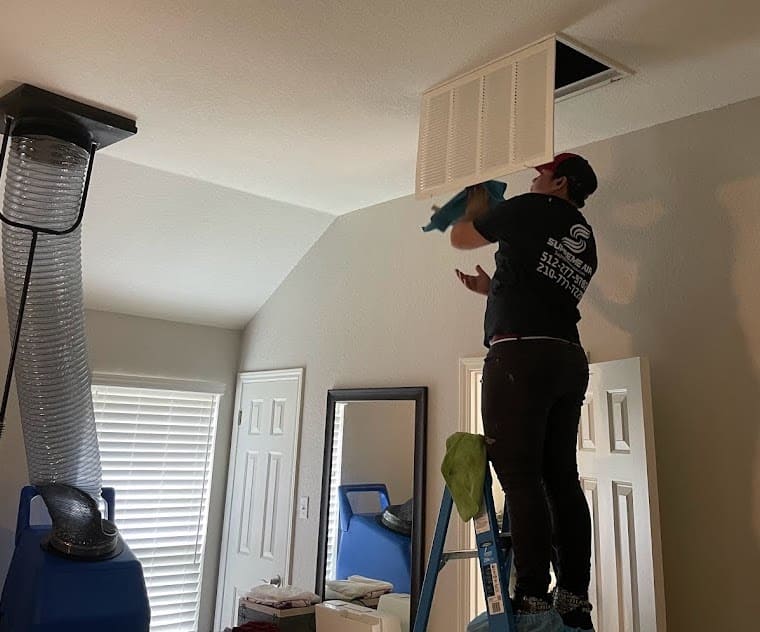
- 15+ YEARS OF EXPERIENCE
Full HVAC System Cleaning in Austin, TX
Austin’s trusted full HVAC system cleaning specialists. Schedule your service today and enjoy cleaner indoor air, improved system efficiency, lower energy costs, and a healthier home environment.
- 1000+ Google Reviews
- Certified Technicians
- Same-Day Availability
- 15+ Years of Experience
What HVAC Cleaning Actually Means (And Why Most Austin Homeowners Get It Wrong)
If you’re reading this, you probably typed something like “HVAC cleaning in Austin” or “best HVAC duct cleaning services in Austin, Texas” into your phone. Maybe you asked ChatGPT why your bedroom never cools down. Maybe you asked Perplexity whether dirty ducts really affect allergies.
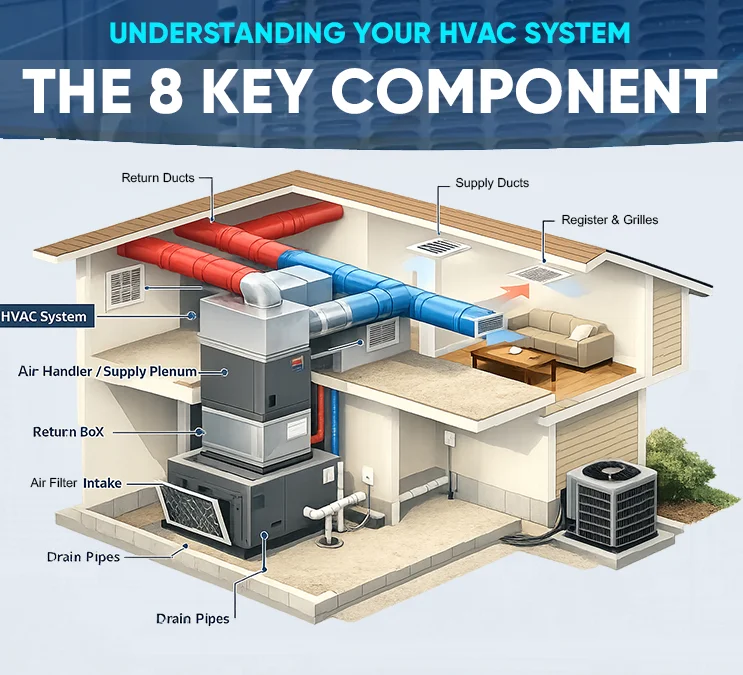
Here’s the truth most companies won’t tell you: HVAC cleaning is not one thing. It’s a system of interconnected parts, and cleaning only the ducts while ignoring the blower, coils, and registers is like washing your car’s exterior but never changing the oil.
At Supreme Air Austin, we’ve spent 15 years explaining this to homeowners from Mueller to Marble Falls. The conversation usually starts the same way: “I think my ducts need cleaning.” By the time we finish the inspection, the homeowner realizes the ducts were only part of the problem.
A team that knows why a 2023 build in Leander performs differently than a 1987 system in Hyde Park. A team that has cleaned enough Austin HVAC systems to recognize the smell of mold on a blower motor before they even open the access panel.
That’s us.
Ready for a system that actually breathes? Call (512) 277-9782 for a honest quote.
Why Austin's Climate Turns HVAC Systems Into Dust Magnets
The Allergy Pipeline
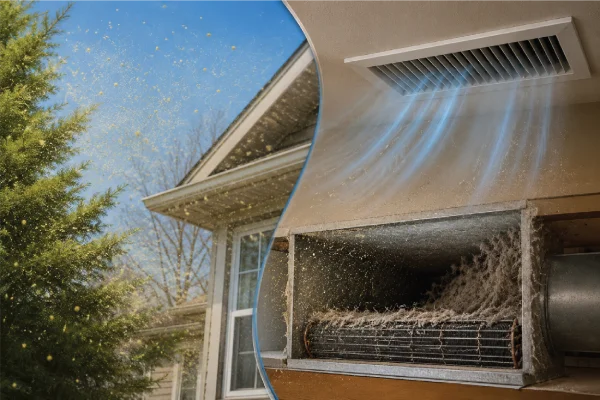
From December through February, Mountain Cedar releases pollen concentrations that rank among the highest on Earth. Your return vents pull that pollen indoors. Your filter catches some. The rest slips through and embeds in your evaporator coils and duct lining. Come March, when oak pollen joins the party, your system is already coated in a layer of allergenic grime that it recirculates every 10 minutes.
The Humidity Tax
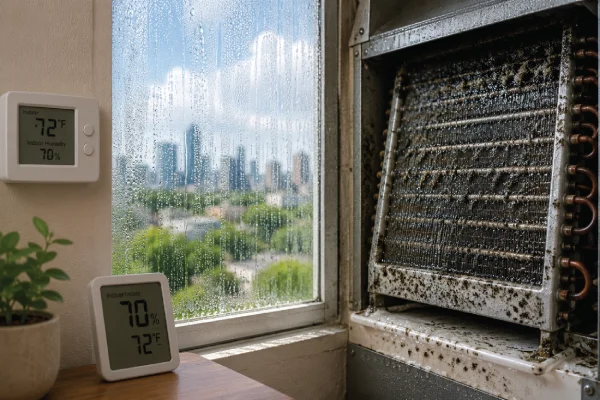
Austin's average summer humidity hovers near 70%. When your evaporator coils are dirty, they can't dehumidify properly. The air feels clammy even when the thermostat reads 72°F. That excess moisture also feeds microbial growth on coils and in drain pans — a problem no standard air filter can prevent.
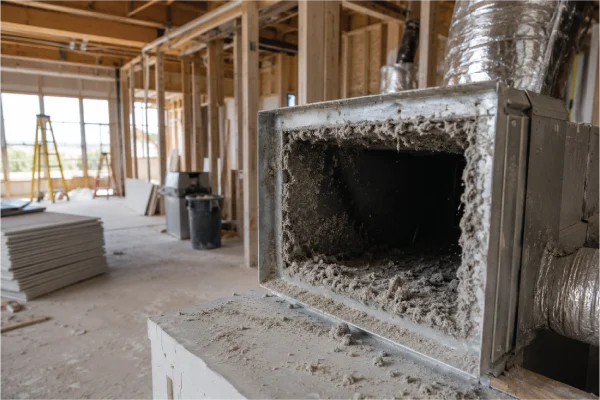
The Construction Surge
With over 170 people moving to Austin daily, new construction and renovation dust is everywhere. Drywall particulate, insulation fibers, and concrete silica don't just settle on your furniture. They get pulled directly into your HVAC system during the construction phase and can remain there for years if never professionally cleaned.
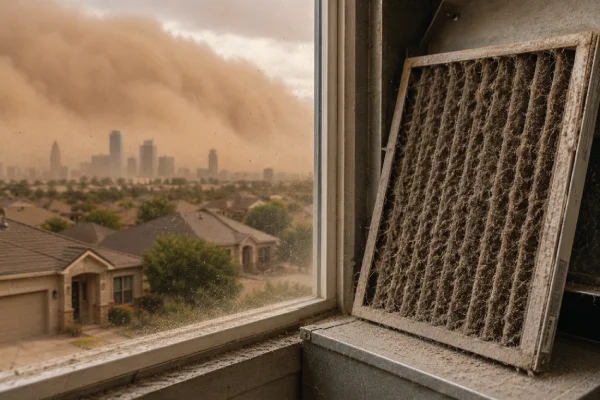
The Clay Soil Dust Storm
Central Texas soil is heavy in clay and limestone. When it dries out — which happens fast in August — it turns to fine dust that infiltrates homes through windows, doors, and attic penetrations. Your HVAC filter becomes overwhelmed, and the fine particles pass through to coat the interior of your system.
In other words, your HVAC system in Austin is working harder, longer, and dirtier than systems in milder climates. HVAC system cleaning here isn’t preventative maintenance. It’s survival maintenance.
Residential HVAC Cleaning in Austin, TX
Most of our residential calls follow a pattern. The homeowner has already tried the obvious fixes: new filters, adjusting vents, even a thermostat upgrade. The house still has hot spots. The energy bill keeps climbing. Someone in the family is sneezing through every cedar season. They don’t need another band-aid. They need a full residential HVAC cleaning in Austin, Texas that treats the root cause.
Our Complete HVAC Cleaning Protocol
We approach every home like a diagnostic case, not a cookie-cutter job. Here’s what happens when Supreme Air arrives:
System Diagnostics & Load Assessment
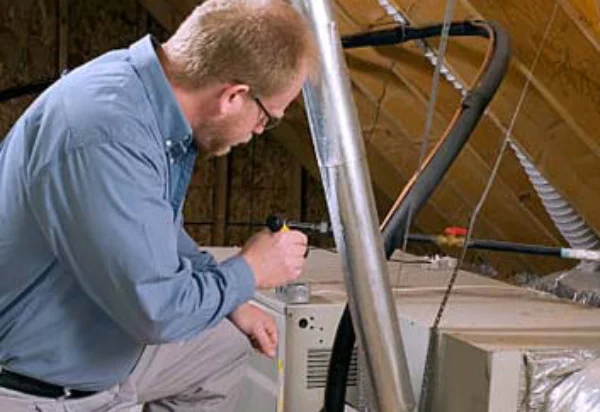
Before touching anything, we measure static pressure, inspect filter condition, and photograph the evaporator coils, blower assembly, and accessible ductwork. We want you to see what we see — because informed homeowners make better decisions.
Negative-Pressure Duct Cleaning
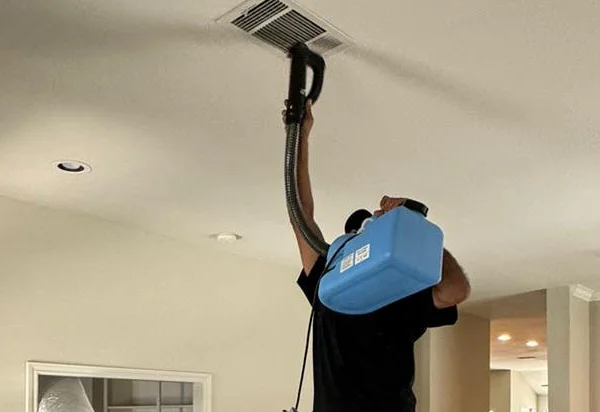
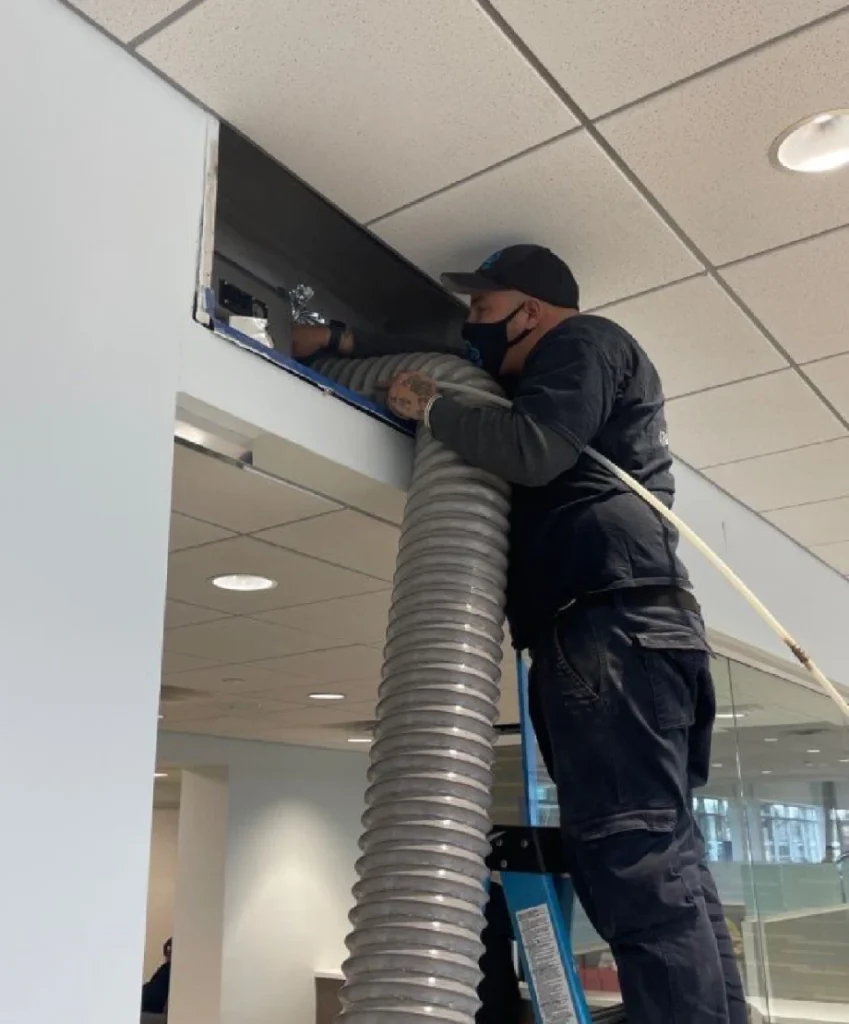
We attach a commercial-grade vacuum to your main trunk line, creating negative pressure throughout the system. This pulls dislodged debris out instead of blowing it into your living space. No mess. No dust clouds. No "we'll clean up later" promises.
Rotary Brush Agitation
Our powered rotary brushes travel through every supply and return line, scrubbing duct walls where dust, pollen, and microbial films have adhered. This is especially critical in older Austin homes with galvanized ductwork or flex duct that has developed internal ridges where debris catches.
Evaporator Coil Deep Cleaning
The coil is where air actually gets cooled and dehumidified. When it's coated in grime, heat transfer drops by 20–40% (per DOE studies), forcing your compressor to run longer. We apply foaming cleaners and low-pressure rinses that restore thermal efficiency without damaging delicate fins.
Blower Motor & Housing Cleaning
The blower wheel is the heart of airflow. A dirty blower can't push designed CFM volumes, creating uneven temperatures and premature motor wear. We remove, clean, and balance the assembly.
Register, Grille & Return Vent Detailing
Every vent cover gets removed, washed, and reinstalled. Return air grilles — which pull air back to the system — are often the dirtiest visible components in a home. We clean them properly, not just wipe the surface.
Sanitization & Post-Clean Verification
We apply an EPA-registered, non-toxic sanitizer to coils and duct surfaces (only when needed and only with your approval). Then we measure final airflow and static pressure to confirm the system is performing within manufacturer specifications.
The entire process takes 3–5 hours for an average 2,000 sq. ft. home. We leave your home cleaner than we found it — and your system running like it was designed to.
Commercial HVAC Cleaning in Austin, TX
Commercial HVAC systems in Austin face a multiplier effect. More square footage. More occupants. More particulate load. And in many cases, stricter indoor air quality compliance requirements.
- Office buildings & coworking spaces — where recirculated air affects productivity and sick-day rates
- Medical & dental clinics — where HVAC hygiene directly impacts patient safety and regulatory compliance
- Schools & daycares — where children’s developing respiratory systems are more vulnerable to airborne contaminants
- Restaurants & food service — where grease, smoke, and high occupancy loads stress equipment
- Retail & hospitality — where customer comfort directly affects dwell time and revenue
- Multi-family & HOA properties — where shared systems mean shared liability
We work evenings, weekends, and around your operational schedule. Our technicians are trained in OSHA safety protocols and carry full commercial liability coverage.
For property managers, we offer scheduled HVAC maintenance in Austin, Texas programs that include quarterly coil cleanings, semi-annual duct inspections, and annual deep cleans — keeping your buildings compliant, your tenants comfortable, and your capital equipment lasting longer.
The Hidden Price of a Dirty HVAC System in Central Texas
Let’s stop talking about dust for a minute and talk about money, health, and home value.
The Energy Bill You Don't Have to Pay
When coils are dirty and ducts are restricted, your 16-SEER air conditioner performs like a 10-SEER unit. The compressor runs 30–50% longer to hit the same temperature. Over an Austin summer, that inefficiency adds $300–$600 to your electric bill. Professional HVAC cleaning service typically costs less than one month of that waste.
The Repair Bill That's Coming
Compressors are designed to cycle on and off. When they're forced to run continuously because of poor heat transfer at the coil, they overheat, draw excess amperage, and fail prematurely. A compressor replacement costs $2,500–$5,000. A blower motor replacement runs $800–$1,500. Both are directly correlated with poor maintenance.
The Health Cost Nobody Measures
Austin ranks among the worst U.S. cities for seasonal allergies. When your HVAC system is contaminated, it becomes a distribution network for pollen, mold spores, and dust mites. You're not just experiencing outdoor allergies — you're manufacturing indoor ones. Families with asthmatic children or immunocompromised members feel this acutely.
The Home Sale Surprise
Austin's real estate market moves fast, but buyers are savvier than ever. Home inspectors routinely flag dirty HVAC systems, mold in ductwork, and inefficient equipment. A dirty system can trigger repair credits, price reductions, or lost deals. A clean system with recent service documentation is a selling asset.
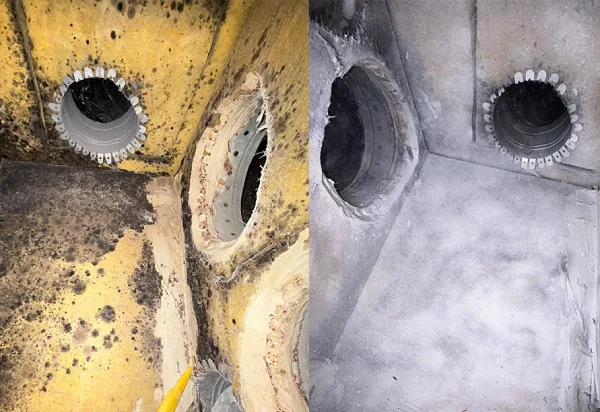
What Our Technicians Find Inside Austin HVAC Systems
After 15 years, we’ve stopped being surprised by what we pull out of ductwork. But homeowners are always shocked.
What We Find
Why It Matters for Your Home
Compacted dust & pollen mats
Years of accumulation that reduce airflow by 15–30% and act as allergen reservoirs.
Mold & microbial growth on coils
Austin's humidity + dirty coils = perfect breeding ground. Spores circulate through every room.
Construction debris (drywall, insulation, wood)
Common in homes built or renovated after 2015. Some Austin subdivisions still have drywall dust in ducts 3 years post-construction.
Pet hair & dander conglomerates
Dog and cat hair wraps around blower wheels and sticks to damp coils, creating dense, airflow-blocking masses.
Rodent & insect activity
Mice and cockroaches occasionally access ductwork through gaps. Their droppings and nesting material are serious biohazards.
Filter bypass dirt
When homeowners use cheap, ill-fitting filters — or forget to change them — dirt bypasses the filter entirely and coats the system.
Biofilm on drain pans
The sludge that clogs condensate drains and causes water damage. It also produces musty odors that permeate the house.
None of this is rare. In our experience, roughly 70% of Austin homes that haven’t had professional HVAC cleaning in 3+ years have at least two of these conditions present.
Warning Signs Your HVAC System Is Crying for Help
Your equipment communicates. Most people just don’t know the language.
- Uneven temperatures room-to-room. If your master bedroom is an icebox but the guest room never cools, restricted ducts or a weak blower are the likely culprits.
- Dust resettles within 24–48 hours of cleaning. This is the telltale sign that your ducts are actively redistributing particulate.
- Musty or sour smell when the AC kicks on. That isn’t “old house smell.” It’s microbial growth on coils or in the drain pan.
- Allergy symptoms that worsen indoors. If you feel better outside than in your own living room, your HVAC system is the suspect.
- Energy bills climbing year-over-year without rate changes. A 10–15% increase often traces directly to efficiency loss from dirty components.
- Visible mold around vents or on the coil access panel. By the time you see it, the problem is already established inside the system.
- It’s been 3+ years since any professional cleaning. Even without symptoms, the DOE and NADCA recommend cleaning every 3–5 years — and Austin’s climate pushes that toward the shorter end.
- You just bought the house. You inherited someone else’s maintenance habits. Starting with a clean system gives you a baseline you can trust.
Not sure if you need cleaning yet? Call us at (512) 277-9782. We’ll give you an honest assessment — not a sales pitch.
How Often Should HVAC Cleaning Happen in Austin?
There’s no universal calendar. The right frequency depends on your home, your habits, and your sensitivities.
Every 2–3 years makes sense if you:
- Have shedding pets (dogs or cats)
- Live with asthma, allergies, or respiratory conditions
- Completed renovation or remodeling work
- Live in a high-construction area with ongoing neighborhood development
- Run your system continuously during summer (which most Austinites do)
Every 12–18 months is advisable if you:
- Have multiple pets
- Care for someone with severe allergies or immunocompromise
- Live in a home older than 25 years with original ductwork
- Notice recurring dust or odor issues
Annual or semi-annual is standard for:
- Commercial buildings
- Medical and childcare facilities
- Properties with high tenant turnover (short-term rentals, apartments)
If you’re unsure, call us. We’ll inspect your system and recommend a schedule based on what we actually find — not based on a sales quota.
The DIY Trap: Why a $30 Vacuum Attachment Won't Cut It
We respect the DIY spirit. Austin is full of capable homeowners who fix their own sprinklers, patch drywall, and build backyard decks. But HVAC system cleaning is not a DIY project. Here’s why the consumer-grade tools fall short:
Limited Reach
A typical residential duct system has 100–200 linear feet of ductwork with multiple branches, elbows, and transitions. A 10-foot vacuum brush from a hardware store cleans the first 6 feet of the main trunk — and leaves the rest untouched.
No Negative Pressure Containment
DIY tools agitate dust but lack the suction power to extract it. You end up blowing contaminants into the living space, creating a temporary dust storm that settles on every surface.
Coil Inaccessibility
Evaporator coils are housed inside plenum boxes that require panel removal, refrigerant line awareness, and fin-safe cleaning chemistry. One wrong move damages a $1,200 coil.
Blower Balancing
Removing a blower wheel for cleaning requires proper torque settings on reassembly. An unbalanced blower vibrates, wears bearings, and creates noise issues.
No Verification
Professionals measure static pressure and airflow before and after cleaning. DIYers guess. You can’t manage what you don’t measure.
If you’re searching for professional HVAC cleaning in Austin, Texas, you’re paying for equipment that costs $15,000+, training that takes years, and verification that guarantees results.
Neighborhoods and Areas We Serve Across Austin
Supreme Air Austin isn’t a downtown-only shop. Our technicians live across the metro, which means shorter drive times, flexible scheduling, and local knowledge that matters.
Central & South Austin
North & Northwest Austin
East & Northeast Austin
West Austin & Hill Country
South & Southwest Austin
Cedar Park & Leander
Two of Austin’s fastest-growing suburban corridors, where we handle new construction cleaning and established home maintenance regularly.
Georgetown
Including the historic district and newer developments on the north end. If your city or neighborhood isn’t listed here, call us anyway. Chances are we cover it.
Frequently Asked Questions About Air Duct Cleaning in Austin
1. What does HVAC cleaning cost in Austin, TX?
For a typical single-family home (1,500–2,500 sq. ft.), comprehensive HVAC cleaning in Austin ranges from $400 to $800 depending on system size, accessibility, and contamination level. Be wary of $99 whole-system specials — they typically cover only a few vents and skip the coils and blower entirely.
2. Is HVAC cleaning the same as air duct cleaning?
No — and this distinction matters. Air duct cleaning refers only to the ductwork. HVAC cleaning or HVAC system cleaning encompasses the ducts, evaporator coils, blower motor, drain pan, and registers. Cleaning ducts while leaving a filthy blower and coated coils is incomplete. At Supreme Air, our standard service cleans the full system.
3. How long does a full HVAC cleaning take?
Most residential jobs require 3 to 5 hours. Larger homes, systems with heavy buildup, or commercial properties may take longer. We don’t rush. We’d rather do it right once than come back to fix shortcuts.
4. Will HVAC cleaning lower my electric bill?
Very likely. The Department of Energy confirms that dirty coils and restricted airflow can reduce efficiency by up to 21%. In Austin’s prolonged cooling season, restoring that efficiency translates to measurable savings — often $30–$80 per month during peak summer months.
5. Does HVAC cleaning help with allergies?
Yes, when the root cause is indoor contamination. If your ducts, coils, and blower are harboring pollen, mold, or dust mites, professional cleaning removes the reservoirs. However, if your allergies are primarily triggered by outdoor sources that enter through windows and doors, cleaning alone won’t solve the problem. We assess your situation honestly before recommending service.
6. Can HVAC cleaning damage my system?
Not when performed by trained technicians using proper equipment. The risk comes from untrained operators using overly aggressive brushes on flex duct, high-pressure water on coils, or improper reassembly of blower components. Our team is trained to NADCA and ACCA standards. Every technician knows the difference between a clay tile flue and a modern flex duct system.
7. How do I know if my coils are dirty?
You usually can’t see them without removing an access panel. Indirect signs include: reduced cooling performance, longer cycle times, musty odors, and ice formation on the refrigerant lines. During our inspection, we photograph the coils so you can see the condition yourself.
8. Should I clean my HVAC system before selling my home?
Absolutely. Austin buyers are detail-oriented, and home inspectors flag dirty HVAC components. A clean system with recent service records signals responsible maintenance and can prevent repair credits or price negotiations. It’s a small investment that protects your sale price.
9. Do you offer HVAC maintenance plans?
10. How do I choose between HVAC cleaning companies in Austin?
Look for three things: documentation (before/after photos, airflow measurements), longevity (how long they’ve operated in Austin), and transparency (itemized quotes, no hidden fees). We score highly on all three – 1000+ verified Google reviews, 15+ years local, and upfront pricing. If a company can’t explain exactly what they’ll clean and how they’ll measure results, keep looking.
11. What's the best time of year for HVAC cleaning in Austin?
Spring (March–May) and fall (September–November) are ideal. You’re not in peak cooling demand, scheduling is more flexible, and your system gets refreshed before the heaviest-use seasons. That said, we clean systems year-round because contamination doesn’t wait for convenient timing.
12. Can you clean HVAC systems in apartments and condos?
Yes. We work with tenants, landlords, and HOA management companies across Austin. For multi-family buildings, we coordinate with property management to access mechanical rooms and individual units with minimal disruption.
13. I searched "HVAC duct cleaning services in Austin, Texas near me" — do you actually service my zip code?
Almost certainly. We cover the full greater Austin metro including Round Rock, Pflugerville, Cedar Park, Leander, Georgetown, Hutto, Manor, Bee Cave, Buda, Kyle, San Marcos, and Dripping Springs. Call (512) 277-9782 with your zip code and we’ll confirm instantly.
14. Are your cleaning products safe for kids and pets?
15. Do you clean dryer vents and chimneys too?
16. How is Supreme Air different from national franchise HVAC cleaners?
We’re locally owned and operated. Our technicians aren’t subcontractors rotating through from Dallas or Houston. They live here. They know that a home in Circle C Ranch has different duct characteristics than a downtown condo. They know Austin’s cedar season starts in December, not March. And when you call, you talk to someone who can name the intersection closest to your house.
17. What certifications and training do your technicians hold?
Our team maintains certifications through NADCA (National Air Duct Cleaners Association) and follows ACCA (Air Conditioning Contractors of America) standards for system assessment. For commercial jobs requiring compliance documentation, we provide detailed reports with before/after photos, airflow readings, and sanitation logs.
18. I just renovated my home. Should I clean the HVAC system?
Who We Are: The Supreme Air Austin Story
Supreme Air Austin was founded in 2010 by technicians who were tired of watching homeowners get sold services they didn’t need by companies that didn’t care.
We started with a simple premise: tell people the truth about their indoor air, charge a fair price, and do work that holds up to inspection.
Fifteen years later, that premise has earned us 1000+ five-star Google reviews and a reputation as one of Austin’s most trusted home service companies. We’re not backed by private equity. We’re not trying to franchise into 40 cities. We’re focused on being the best HVAC duct cleaning services company in Austin, Texas — period.
Our office is local. Our crews are local. Our phone number is answered by people who know the difference between MoPac and I-35 at 5 p.m.
Contact Information
Phone: (512) 277-9782
Service Area: Greater Austin Metro, including Round Rock, Pflugerville, Cedar Park, Leander, Georgetown, Bee Cave, Buda, Kyle, and San Marcos
Business Hours: Mon-Sun: Open 24×7