- 15+ YEARS OF EXPERIENCE
Solar Attic Fan Installation Services in Austin, TX
Austin’s trusted solar attic fan installation specialists. Schedule your service today and enjoy lower attic temperatures, reduced HVAC strain, improved energy efficiency, enhanced attic ventilation, and a cooler, more comfortable home year-round.
- 900+ Google Reviews
- Certified Technicians
- Same-Day Availability
- 15+ Years of Experience
Austin's Trusted Solar Attic Fan Installation Experts — Cooler Attics Since 2010
If you’ve ever been in your Austin attic in August, you know the truth: it’s not an attic. It’s an oven. Temperatures up there routinely hit 140°F to 160°F on summer afternoons. That heat doesn’t stay in the attic. It radiates downward through your ceiling, warms your insulation from above, and forces your air conditioner to fight a battle it can’t win — cooling air that’s being reheated before it even reaches your vents.
Most homeowners don’t realize how much their attic is costing them until they see the electric bill in July, or until they walk upstairs and realize the second floor is 10 degrees hotter than the first.
At Supreme Air Austin, we’ve been installing solar attic fans in Austin homes since 2010. We’ve worked in attics from Hyde Park bungalows with shallow 4/12 pitches to sprawling new builds in Avery Ranch with complex rooflines. We know which fan models survive Austin’s hail season, which orientations capture the most Texas sun, and how to ventilate an attic without creating moisture problems or pulling conditioned air out of your living space.
With 900+ five-star Google reviews and 15+ years of hands-on experience in Central Texas homes, we don’t guess. We calculate your attic’s cubic footage, assess your existing ventilation, and install fans that actually move the volume of air your specific roof needs.
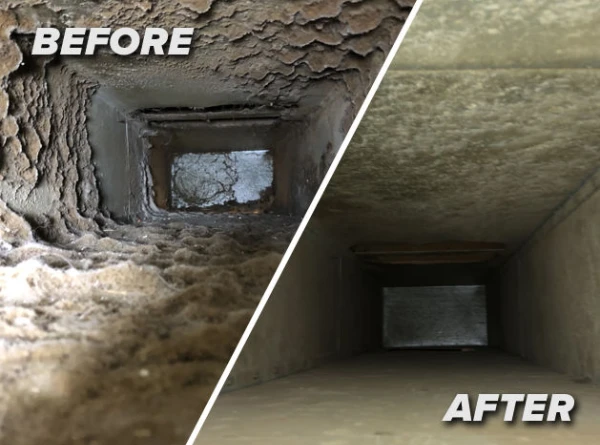
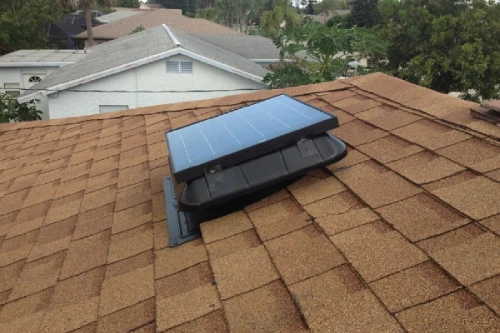
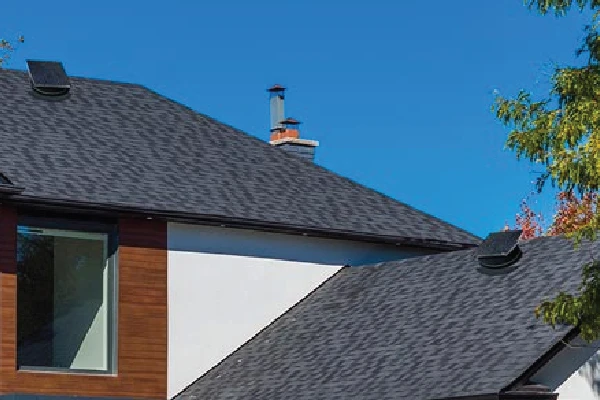
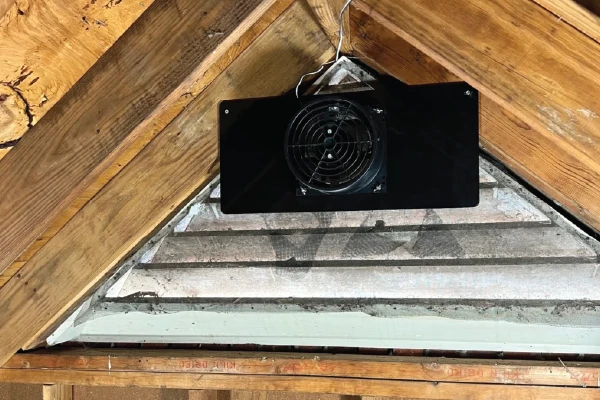
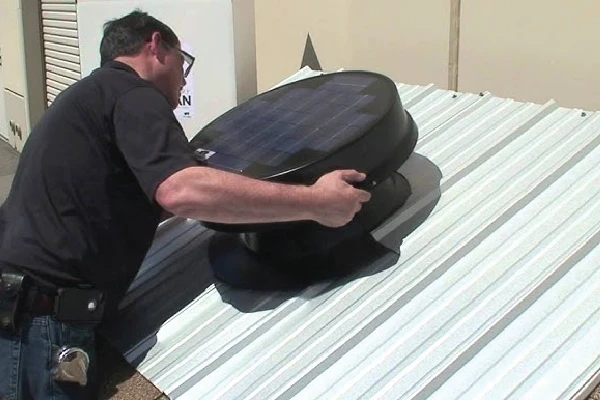
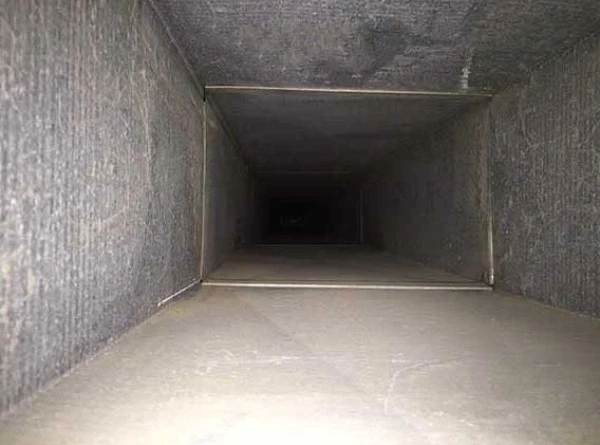
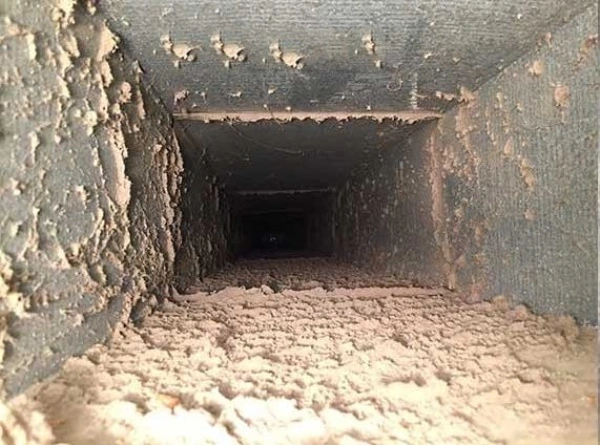
AFTER
BEFORE
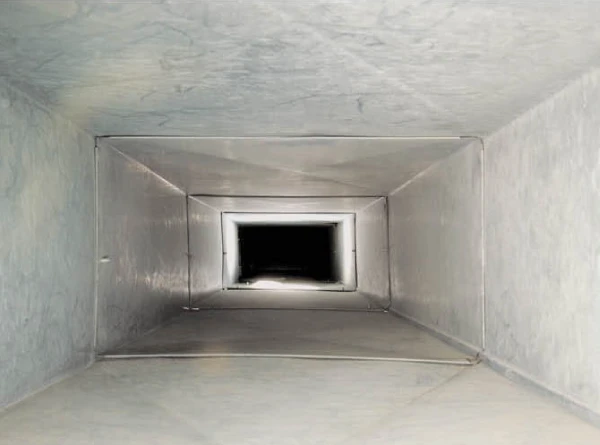
AFTER
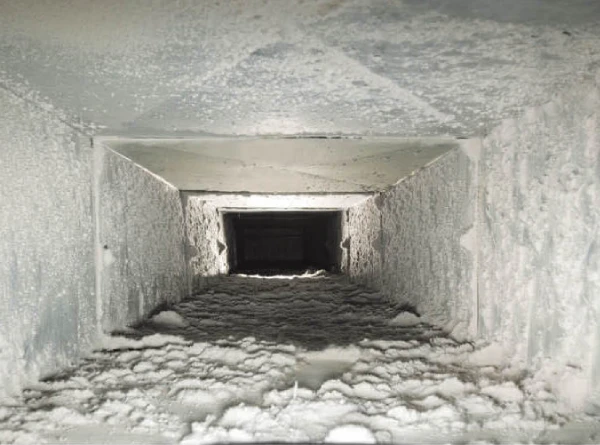
BEFORE
Why Austin Attics Desperately Need Ventilation
Austin’s climate creates attic conditions that are among the most hostile in the country. Here’s what’s actually happening above your ceiling:

The Summer Heat Bomb
From May through October, Austin roofs absorb relentless solar radiation. Asphalt shingles can reach 170°F surface temperature. That heat transfers into the attic space, where it becomes trapped. Without active ventilation, attic temperatures commonly exceed 140°F — even when it's "only" 95°F outside.

Humidity and Moisture
Austin summers are humid. When warm, moist air enters the attic — either from the living space below or from outside — and encounters cooler surfaces (early morning roof decking, HVAC ducts), condensation forms. That moisture creates mold risk, wood rot, and degraded insulation.

Premature Roof and Shingle Failure
Heat is the enemy of asphalt shingles. When attic temperatures stay above 120°F for months, shingles "cook" from below. The adhesive strips degrade. Granules loosen faster. The roof deck warps slightly. A roof that should last 25 years starts showing age at 15.
How Solar Attic Fans Actually Work
A solar attic fan is elegantly simple — and that’s the point. No wiring. No electrician. No impact on your electric bill.
The Basic Mechanism
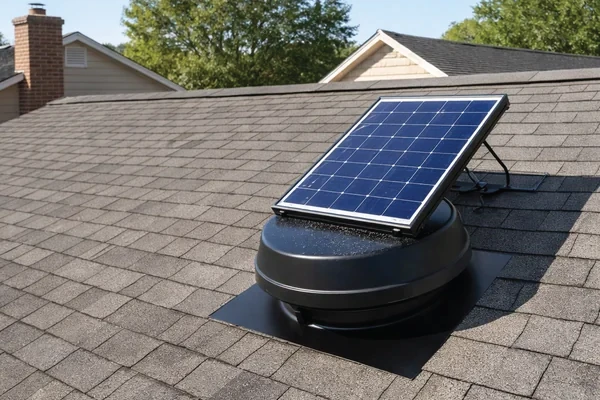
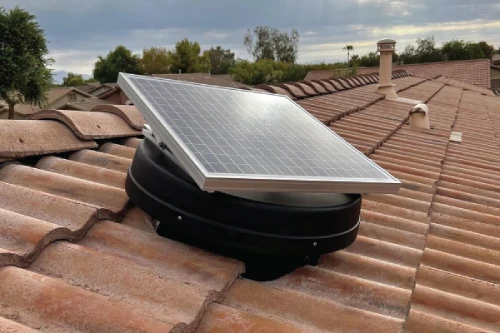
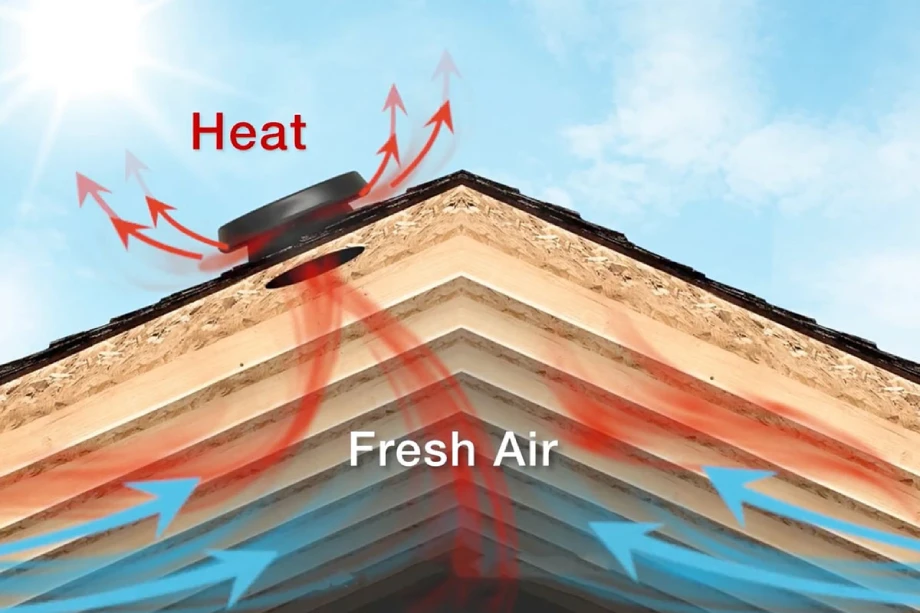
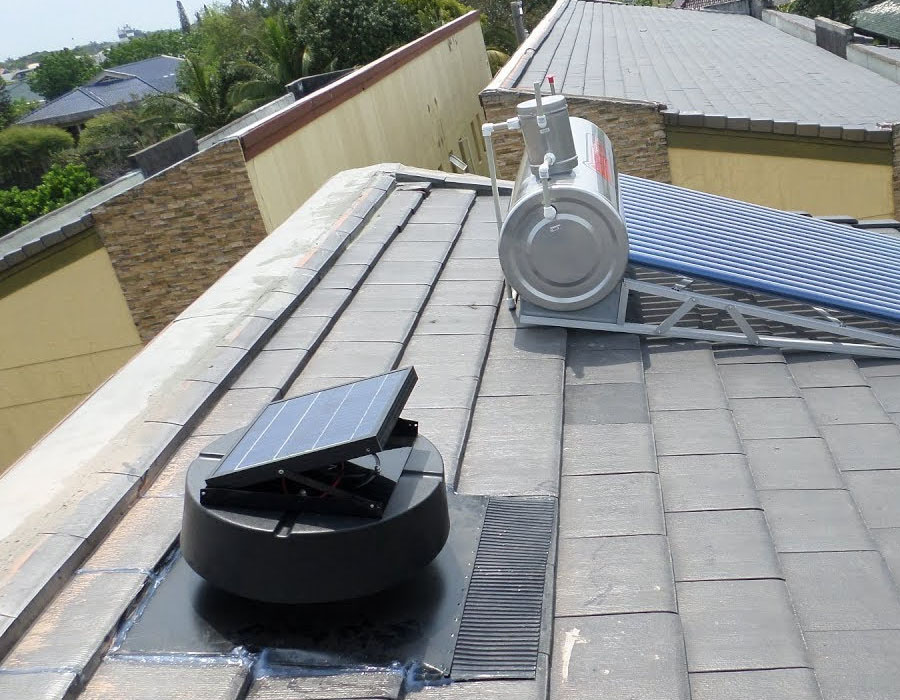
A solar panel mounted on the fan housing converts sunlight into electricity. That electricity powers a DC motor connected to a high-efficiency fan blade. The fan sits on your roof — typically near the ridge — and pulls hot air out of the attic.
As the fan exhausts hot air, it creates negative pressure inside the attic. That negative pressure draws cooler, drier outside air in through your soffit vents (the vents under your eaves). The air circulates through the attic space, picks up heat and moisture, and gets expelled by the fan.
Why Solar Makes Sense in Austin
Austin averages 228 sunny days per year. Summer days are long, and the sun is intense. A solar attic fan runs hardest exactly when your attic needs it most — during peak sun hours when temperatures are highest.
The Thermostat Factor
Quality solar attic fans include a thermostat that prevents operation when attic temperatures are below approximately 80°F. This prevents the fan from running unnecessarily in winter and ensures it only activates when there’s actual heat to remove.
Benefits of Solar Attic Fan Installation in Austin
The benefits aren’t theoretical. We’ve measured attic temperatures before and after installation in hundreds of Austin homes, and the results are consistent.

Lower Attic Temperature
A properly sized and installed solar attic fan typically reduces peak attic temperatures by 30°F to 50°F. An attic that was hitting 150°F at 3 PM now peaks at 110°F. That difference radiates directly into your living space and your HVAC system's workload.

Reduced Cooling Costs
Over a full year, savings of $200–$600 are realistic. Over the 15–20 year lifespan of a quality solar attic fan, the cumulative savings often exceed $5,000 — far more than the initial installation cost.

Extended Roof Life
By reducing the temperature swing between attic and ambient air, and by removing moisture that degrades shingles and decking, proper ventilation extends roof life. In Austin's climate, where heat is the primary roof killer, this is significant.

Improved Comfort
The most immediate benefit homeowners report is simply being able to sleep upstairs in August. Bedrooms that were uncomfortably warm even with the AC running become genuinely comfortable. The radiant heat load from the ceiling disappears.

Moisture and Mold Prevention
Moving air through the attic prevents moisture accumulation. Mold needs stagnant, humid conditions. A ventilated attic is a dry attic. This protects not just your roof structure but also any HVAC equipment or storage items in the attic space.

No Operating Cost
Unlike electric attic fans that draw power from your panel 24/7, solar fans cost nothing to run. The sun provides the energy. There's no wiring, no circuit breaker load, and no increase in your electric bill. The fan pays for itself through savings it creates, not savings it consumes.

Eco-Friendly Operation
Solar attic fans reduce your home's carbon footprint in two ways: by reducing HVAC energy consumption and by operating on renewable solar power. For homeowners who want practical sustainability without major investment, this is one of the most accessible green upgrades available.

Protection for Attic HVAC Equipment
If your air handler or ductwork is in the attic — common in many Austin homes — it's operating in the worst possible environment. A 150°F attic forces your air handler to work in conditions it was never designed for. Ductwork in hot attics loses cooled air through the duct walls before it ever reaches your vents.
Solar vs. Electric Attic Fans: The Honest Comparison
We install both, but we recommend solar for most Austin homes. Here’s why.

Solar Attic Fans
Advantages:
- Zero operating cost — runs on sunlight
- No wiring required — no electrician, no permits in most cases
- Runs hardest when needed most (peak sun = peak heat)
- Quiet DC motors
- No impact on electric bill
- Qualifies for some local energy efficiency incentives
Limitations:
- Doesn’t run at night or on heavily overcast days (though this is rarely a problem)
- Initial cost slightly higher than basic electric models
- Output depends on sun exposure — shaded roofs may not be ideal candidates

Electric Attic Fans
Advantages:
- Run regardless of weather or time of day
- Lower upfront cost for basic models
- Higher airflow capacity in some models
Limitations:
- Draw power continuously during operation — often $10–$30 per month added to electric bill
- Require electrical wiring, permits, and electrician involvement
- Can create negative pressure that pulls conditioned air out of your home if soffit vents are inadequate
- Louder operation
- Create a net energy cost that offsets some of the savings
Our Honest Recommendation
For most Austin homes with adequate sun exposure, solar is the better long-term value. The absence of wiring costs, the zero operating cost, and the alignment between sun intensity and attic heat make it the logical choice. We recommend electric fans only for heavily shaded roofs or specific commercial applications where constant operation is required.
Our Solar Attic Fan Installation Process
We don’t just cut a hole and drop a fan in. Proper installation requires roof integrity, correct sizing, and integration with your existing ventilation system.
Attic Ventilation Assessment
We perform a detailed attic evaluation, measuring square footage, ventilation levels, roof conditions, solar exposure, and attic temperatures. We also inspect HVAC equipment locations and identify any factors that may impact airflow, efficiency, or fan performance.
Fan Sizing and Placement Planning
Proper sizing is essential for effective attic ventilation. We calculate the required airflow capacity based on attic volume, heat load, and roof design. We then determine the ideal installation location to maximize solar exposure and ventilation performance.
Soffit Vent Inspection and Airflow Preparation
A solar attic fan requires adequate intake airflow to operate efficiently. We inspect soffit vents for blockages, restrictions, or insufficient capacity and ensure proper air intake to prevent negative pressure and maintain balanced attic ventilation.
Roof Penetration and Weatherproof Installation
We carefully cut and prepare the roof opening, install flashing systems that integrate with existing roofing materials, and seal all penetrations against water intrusion. Every installation is completed to provide long-term durability and weather resistance.
Fan Installation and Solar Panel Setup
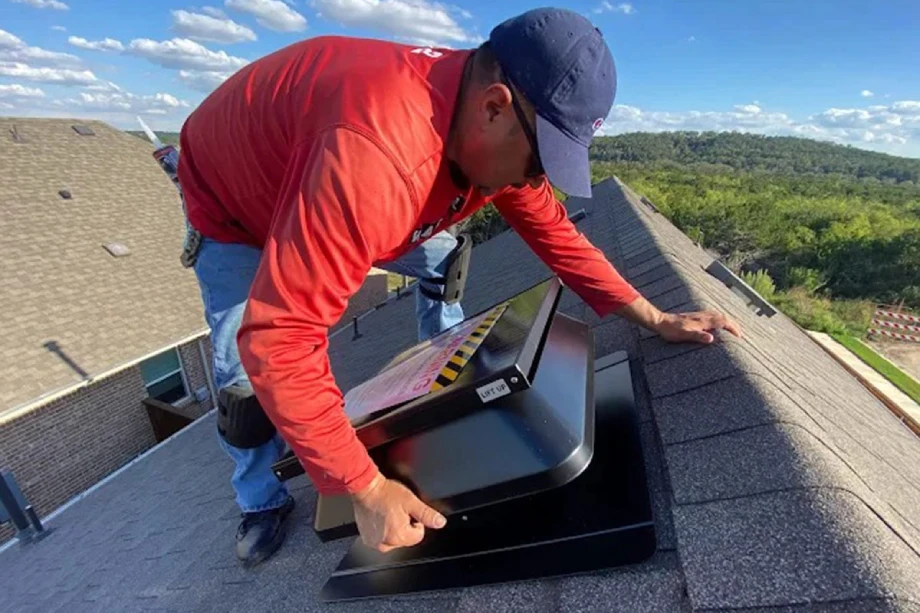
We assemble and mount the solar attic fan, position the solar panel for maximum sun exposure, and secure all components against wind and weather. Proper orientation and fastening ensure reliable operation throughout the year.
Performance Testing and Final Walkthrough
After installation, we test fan operation, verify airflow performance, and document the completed work. We clean the work area, provide installation photos, explain system operation, and answer any questions about ongoing performance and maintenance.
Need an estimate for your building size? Call (512) 277-9782 for transparent, upfront commercial pricing.
Signs Your Austin Home Needs a Solar Attic Fan
Your home and your comfort will tell you when the attic is overheating.
- Your upstairs is unbearably hot in summer. Even with the AC running, bedrooms and upper-level rooms feel stuffy and uncomfortable.
- Your energy bills spike every summer. Your electricity usage climbs 40–60% from April to September, and the largest portion is cooling.
- Your air conditioner runs constantly and never reaches the set temperature upstairs. The system is fighting heat gain from above.
- You can feel heat radiating from your ceiling. Place your hand on an upstairs ceiling in August. If it’s warm to the touch, your attic is transferring heat downward.
- Your attic smells musty or damp. Stagnant, hot, humid air creates conditions for mold and mildew.
- Your roof shingles are aging prematurely. Curling, granule loss, or cracked shingles on a relatively young roof indicate excessive attic heat.
- Your attic insulation looks compressed or degraded. Extreme heat breaks down fiberglass and cellulose over time, reducing R-value.
- You have HVAC ductwork or equipment in the attic. These components are operating in a hostile environment. Ventilation protects them.
- Your home was built before adequate ventilation codes. Many homes built before the 2000s have minimal or no attic ventilation.
- Ice dams formed during the last hard freeze. Even in Austin, this indicates heat escaping through the roof unevenly due to poor ventilation.
Seeing these signs? Call us at (512) 277-9782. for a free attic inspection. We’ll show you photos of what we find.
How Many Fans Does Your Home Need?
Most Austin homes need one solar attic fan for adequate ventilation. But some homes need more.
One Fan Is Usually Sufficient If:
- Your attic is under 2,000 square feet
- Your roof has a simple gable or hip design
- You have adequate soffit ventilation on all sides
- Your attic has no major obstructions dividing the space
Two Fans May Be Needed If:
- Your attic exceeds 2,500 square feet
- You have a complex roof with multiple dormers, valleys, or separate attic spaces
- Your home is long and narrow with limited cross-ventilation
- One side of your roof is heavily shaded while the other receives full sun
Three or More Fans
- Very large homes (4,000+ sq ft)
- Homes with multiple separate attic zones
- Some commercial applications
Neighborhoods and Areas We Serve Across Austin
We’ve been in attics in virtually every Austin neighborhood. From 1920s bungalows with shallow crawl-attics to modern homes with sprawling truss-framed spaces, we know the local housing stock.
Central & South Austin
North & Northwest Austin
East & Northeast Austin
West Austin & Hill Country
South & Southwest Austin
Cedar Park & Leander
Fast-growing suburbs with new construction that often has minimal attic ventilation.
Georgetown
Historic and new developments with varying attic designs and ventilation needs.
Frequently Asked Questions About Solar Attic Fans in Austin
1. How much does solar attic fan installation cost in Austin?
For a typical Austin home, professional solar attic fan installation ranges from $800 to $1,500 including the fan unit, roof penetration, weatherproofing, and labor.
Factors affecting cost:
- Roof pitch (steeper roofs require more labor and safety equipment)
- Roof material (tile roofs are more complex than asphalt shingles)
- Accessibility of the attic
- Number of fans needed
- Condition of existing soffit vents
We provide free, written estimates before any work begins.
2. Will a solar attic fan really lower my electric bill?
Yes — typically by 10–20% during cooling season. The exact savings depend on your home’s insulation, HVAC efficiency, and how hot your attic was getting before installation. Most Austin homeowners see measurable reductions in summer electric bills. The fan pays for itself in 3–5 years through energy savings alone.
3. Do solar attic fans work when it's cloudy?
Partially. On overcast days, the solar panel still generates some electricity, though at reduced output. The fan may run at lower speed or not at all during heavy cloud cover. However, cloudy days are also cooler days, so the attic isn’t building dangerous heat. The fan runs hardest exactly when it’s needed most — during intense sun.
4. What happens at night?
The fan doesn’t run at night. This is by design. Nighttime attic temperatures drop naturally after sunset. The heat problem is a daytime phenomenon. A well-ventilated attic during the day cools down significantly by evening, and the thermal mass of the roof decking doesn’t reheat the attic quickly after dark.
5. Will a solar attic fan cause a roof leak?
Not when installed correctly. Our installations include proper flashing, curb mounting, and high-temperature sealants that integrate with your existing shingles. We warranty our installations against leaks. The key is professional installation — amateur roof penetrations are where leaks happen.
6. How loud are solar attic fans?
Significantly quieter than electric attic fans. Solar fans use DC motors that operate at lower RPMs and produce minimal noise. Most homeowners don’t hear them at all from inside the house. From outside, the sound is comparable to a quiet bathroom exhaust fan.
7. Do I need to clean or maintain the fan?
Minimal maintenance. We recommend:
- Checking the solar panel for debris or shading annually
- Ensuring soffit vents remain clear of insulation or debris
- Verifying the fan spins freely after hail storms (rarely an issue with quality units)
The fans are designed for 15–20 year lifespans with essentially no maintenance.
8. Will the fan pull conditioned air out of my house?
Only if your attic has inadequate intake ventilation. This is why we inspect soffit vents before installation. If the fan can’t draw enough air from outside through soffit vents, it may create negative pressure that pulls air from your living space through ceiling cracks and recessed lights. We prevent this by ensuring adequate soffit ventilation. If your soffits are inadequate, we tell you upfront and recommend solutions.
9. Can I install a solar attic fan myself?
We don’t recommend it. Roof penetrations require knowledge of flashing, shingle integration, and waterproofing. Incorrect installation leads to leaks, inadequate airflow, or roof damage. Additionally, working on an Austin roof in summer is dangerous — surface temperatures exceed 150°F. Our technicians are trained, insured, and equipped for safe roof work.
10. How long does installation take?
Most residential installations take 2–3 hours. Complex roofs, tile roofs, or jobs requiring soffit vent additions may take longer. We’ll give you a clear time estimate before we start.
11. Do solar attic fans qualify for tax credits or rebates?
Solar attic fans may qualify for federal energy efficiency tax credits depending on current legislation. We can provide documentation of your installation for tax purposes. Local Austin utility rebates vary — check with Austin Energy for current programs. We stay informed on available incentives and will share what we know during consultation.
12. What if my roof is shaded by trees?
Partial shading reduces fan output but doesn’t necessarily eliminate it. We evaluate your roof’s sun exposure during our assessment. If one slope is shaded, we may be able to install on a sunnier section. If your entire roof is heavily shaded, we may recommend alternative ventilation strategies or electric fans. We tell you honestly if solar isn’t right for your property.
13. Will a solar fan help in winter?
Indirectly. While the fan’s primary benefit is summer heat removal, winter ventilation prevents moisture accumulation. However, the thermostat typically prevents winter operation unless the attic warms significantly. The main winter benefit comes from the soffit and ridge ventilation system that the fan enhances — passive airflow continues year-round.
14. Can I add a solar attic fan if I already have ridge vents?
Yes. Ridge vents provide passive ventilation, but they rely on natural convection — hot air rising — which is slow. A solar fan provides active, forced ventilation that moves significantly more air. The combination of ridge vents and a solar fan is actually ideal: the ridge vent allows continuous passive airflow, and the fan kicks in during peak heat to actively exhaust hot air.
15. What roof types can you install on?
We install on:
- Asphalt shingle roofs (most common in Austin)
- Metal roofs (with specialized flashing)
- Tile roofs (clay and concrete — requires additional labor)
- Flat or low-slope roofs (with curb-mounted units)
We assess your roof type during consultation and quote accordingly.
16. Do solar attic fans work with spray foam insulation?
This requires careful evaluation. Spray foam insulation applied to the roof deck creates a “conditioned attic” where the attic space is inside the thermal envelope. In these cases, attic ventilation is handled differently — sometimes not needed at all, sometimes requiring specific strategies. We evaluate spray foam attics individually and recommend accordingly. We do not install standard solar attic fans in conditioned attics without proper assessment.
17. How do I know if my soffit vents are adequate?
The general rule is 1 square foot of soffit vent area per 150 square feet of attic floor space. Most Austin homes built before 2010 have inadequate soffit ventilation. During our assessment, we measure your existing soffit vent area and tell you if it’s sufficient. If not, we can add soffit vents as part of the project.
18. Can a solar attic fan extend my HVAC system's life?
Yes. By reducing the temperature your air handler and ductwork operate in, and by reducing the runtime required to cool your home, the fan reduces wear on compressors, blowers, and electrical components. Less heat stress and fewer operating hours mean longer equipment life and fewer repair calls.
About Supreme Air Austin Solar Services
Supreme Air Austin is a locally-owned company serving Austin, Texas and surrounding communities since 2010. We started in air duct cleaning, expanded into attic insulation and air purification, and added solar attic fan installation because our customers kept asking for help with the single biggest driver of their summer discomfort: their attic.
We’re not a franchise. We’re not a call center. We’re Austin locals who have climbed into attics in 140°F heat so you don’t have to. We understand that a solar attic fan isn’t just a gadget — it’s a practical solution to a real problem that every Austin homeowner faces.
With 900+ five-star Google reviews and 15+ years of experience, we’ve installed ventilation solutions in homes from Travis Heights to Cedar Park, from Georgetown to Kyle. Every installation is sized correctly, flashed properly, and backed by our workmanship warranty.
Every solar attic fan job includes:
- Free attic ventilation assessment
- Honest sizing and placement recommendations
- Soffit vent inspection and clearing
- Professional roof penetration with leak-proof flashing
- Hail-resistant fan and panel selection
- Before-and-after temperature documentation
- Cleanup and owner education