
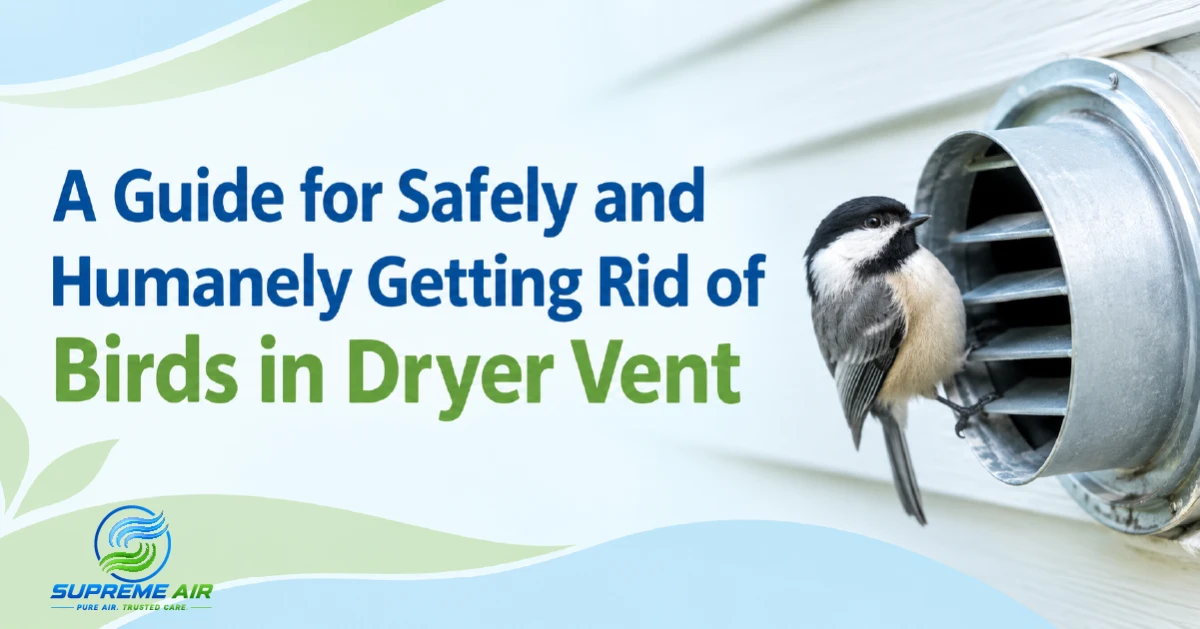

A bird nest in your dryer vent is not a minor inconvenience. It is a fire hazard, a health risk, and a direct threat to your dryer’s efficiency and lifespan. Every year, Austin homeowners discover nests packed with twigs, grass, feathers, and droppings blocking their vent exits, and many do not realize how dangerous the situation is until it is too late.
At Supreme Air Austin, we remove bird nests from dryer vents across the greater Austin metro every spring and summer. We have pulled nests the size of basketballs from second-story vents in Round Rock, cleared multiple nests from apartment complexes in Cedar Park, and installed bird-proof covers on homes from Hyde Park to Circle C Ranch. We know what works, what the law requires, and how to handle this safely without harming the birds or your property.
This guide covers everything you need to know: why birds choose dryer vents, how to spot a nest before it becomes a serious problem, the legal protections you need to understand, and why professional removal is almost always the right choice.
Why Birds Build Nests in Dryer Vents
To solve the problem, it helps to understand why it happens in the first place. Birds do not randomly choose dryer vents. They select them for specific, predictable reasons, and once they find a suitable site, they return year after year.
Warmth
The warm air exhausting from your dryer vent creates a heated microclimate that birds find ideal for incubating eggs. During Austin’s cooler spring mornings and mild winters, this warmth is a significant draw. A vent that runs several times a week maintains a temperature several degrees above ambient air, making it one of the warmest sheltered spots available.
Shelter
Dryer vents are enclosed tubes that protect nests from wind, rain, and most predators. Unlike tree branches or open ledges, a vent interior is hidden from hawks, cats, and squirrels. The narrow opening allows small birds to enter while keeping larger threats out.
Structure
The cylindrical shape of a dryer vent closely mimics the natural cavities and hollows that many bird species prefer. House sparrows, starlings, and some finches are cavity nesters by nature. A 4-inch vent pipe feels like a hollow branch to them.
Availability
Austin’s mature neighborhoods, especially those with large oak and pecan canopies, support dense bird populations. Hyde Park, Tarrytown, Allandale, and similar areas have mature trees that attract birds, and the homes in these neighborhoods often have older vent covers that are easy for birds to penetrate or remove.
Signs You Have a Bird Nest in Your Dryer Vent
Bird nests do not announce themselves loudly at first. The signs build gradually, and homeowners often dismiss early warnings. Here is what to watch for.
Chirping or Scratching Sounds
The most obvious sign. If you hear birds vocalizing near your laundry room, especially during spring and early summer, trace the sound. If it seems to come from inside the wall or near the exterior vent, you likely have an active nest.
Longer Drying Times
A nest blocks airflow. Your dryer needs adequate exhaust to remove moisture. When the vent is partially blocked, clothes take significantly longer to dry. A load that normally takes 45 minutes now takes 90 minutes or more, and clothes may still feel damp.
Burning Smell
This is an emergency sign. When airflow is restricted, lint and heat build up in the dryer and vent. The trapped heat can scorch lint, nesting material, or even the dryer’s internal components. If you smell burning, stop using the dryer immediately and call for professional removal.
Visible Nesting Material at the Vent Exit
Look at your exterior vent cover. Do you see twigs, grass, feathers, or debris protruding from the opening? Birds often build outward from the vent, and the material becomes visible before the blockage is complete.
Bird Droppings on Exterior Walls
Active nesting sites produce droppings. If you notice concentrated bird droppings on the wall, ground, or windowsill below your dryer vent, birds are spending significant time at that location.
Increased Bird Activity
Birds defending a nest become territorial. If you notice birds repeatedly flying to and from your vent cover, perching nearby, or behaving aggressively toward other birds, they have likely established a nest.
Hot Dryer or Laundry Room
Restricted airflow causes heat to back up into the dryer and the surrounding space. If your laundry room feels unusually warm when the dryer runs, or if the dryer exterior is hot to the touch, a vent blockage is the likely cause.
The Dangers of a Bird Nest in Your Dryer Vent
A bird nest is not just an inconvenience. It creates multiple serious risks that escalate the longer it remains.
Fire Hazard
This is the most immediate danger. Bird nests are composed of dry twigs, grass, leaves, and feathers. Highly flammable material. When your dryer runs, the exhaust air reaches 150 to 200 degrees Fahrenheit. A nest packed into the vent is essentially kindling in a chimney. According to the National Fire Protection Association, dryers and washing machines cause an estimated 15,970 home structure fires annually, with the leading cause being failure to clean the dryer vent. A bird nest is one of the most severe blockages a vent can have.
Carbon Monoxide Poisoning (Gas Dryers)
If you have a gas dryer, the vent does more than exhaust moisture. It removes combustion gases, including carbon monoxide. A bird nest can force these toxic gases back into your home instead of outside. Carbon monoxide is odorless, colorless, and potentially fatal. Symptoms include headache, dizziness, nausea, and confusion. If multiple household members experience these symptoms, especially when the dryer runs, evacuate immediately and call emergency services.
Dryer Damage and Inefficiency
A blocked vent forces your dryer to work against backpressure. The heating element overheats. The motor strains. Bearings wear prematurely. Drying times double or triple. Energy consumption increases by 30 to 50 percent. And the appliance lifespan shortens dramatically. What should be a 15-year dryer becomes a 7-year dryer.
Health Risks from Droppings and Parasites
Bird droppings contain bacteria, fungi, and parasites. Histoplasmosis, cryptococcosis, and psittacosis are diseases associated with exposure to bird waste. When birds nest in your vent, these contaminants are inches from your living space. The warm, moist air from the dryer can aerosolize particles and draw them indoors. Additionally, bird nests harbor mites, ticks, and fleas that can migrate into your home.
Structural and Exterior Damage
Birds peck at vent covers, siding, and roofing materials to gain access or enlarge openings. Their acidic droppings corrode metal, stain paint, and damage wood surfaces. Over time, an ignored nest leads to costly exterior repairs beyond just vent replacement.
Legal Considerations: The Migratory Bird Treaty Act
Before you grab a ladder and start pulling, you need to understand the legal framework. Many homeowners are surprised to learn that removing a bird nest can be illegal.
What the Law Says
The Migratory Bird Treaty Act of 1918 protects most native bird species in the United States, including common species found in Austin such as chimney swifts, barn swallows, house finches, and many sparrows. It is illegal to disturb, destroy, or remove active nests containing eggs or young birds without a federal permit. Violations can result in fines up to $15,000 per incident and potential imprisonment.
What “Active” Means
An active nest is one that contains eggs or dependent young. Once the young have fledged and left the nest, the nest is considered inactive and can generally be removed. However, some species build multiple broods per season, so a nest that appears empty may soon be reoccupied.
Species That Are Not Protected
House sparrows, European starlings, and pigeons are non-native species not covered by the Migratory Bird Treaty Act. Their nests can be removed at any time. However, identifying the species requires expertise. Many protected species and non-protected species look similar, especially to untrained observers.
Why This Matters for Homeowners
If you remove an active nest of a protected species, you are breaking federal law. Even if your intentions are good, even if the nest is causing problems, the law does not make exceptions for convenience. Professional dryer vent cleaners in Austin, Texas can identify the species, determine whether the nest is active, and advise on the legal, humane course of action.
When Removal Is Permitted
There are limited exceptions for nests that pose immediate human health or safety risks, but these generally require documentation and sometimes permits. Do not assume your situation qualifies. Call professionals who understand the regulations.
DIY Nest Removal: Why We Do Not Recommend It
We understand the impulse to handle this yourself. It seems straightforward. It is not. Here is why professional removal is almost always the better choice.
Legal Risk
As described above, removing the wrong nest at the wrong time can result in federal fines. Unless you can positively identify the species and confirm the nest is inactive, you are taking a legal gamble.
Safety Risk
Working on ladders, accessing roof vents, and reaching into ductwork carries significant injury risk. Dryer vents on second stories, steep roofs, or behind dense landscaping are particularly dangerous. Falls from ladders cause thousands of injuries annually. Our technicians are trained, insured, and equipped for safe roof and ladder work.
Incomplete Removal
Removing the visible nest is rarely enough. Birds often build deep into the vent run, creating multiple chambers or leaving debris far from the exterior opening. Without commercial cleaning equipment, you will likely leave enough material behind to create a fire hazard or attract new birds.
Reinfestation
Even if you successfully remove the nest, without a proper bird-proof vent cover, birds will return. They remember successful nesting sites. A pair that nested in your vent this spring will be back next spring unless you seal the entry.
Health Exposure
Handling bird nests exposes you to droppings, parasites, and fungal spores. Without proper respiratory protection and sanitation protocols, you risk histoplasmosis and other diseases. Professional technicians use full PPE and follow decontamination procedures.
The Supreme Air Austin Bird Nest Removal Process
When you call Supreme Air Austin for bird nest removal from your dryer vent, here is exactly what happens.
1. Inspection and Species Identification
We examine the vent from both the interior and exterior. We identify the bird species, assess whether the nest is active, and determine the extent of the blockage. If the nest contains eggs or young of a protected species, we advise on the legal waiting period before removal.
2. Safe and Humane Removal
For inactive nests or non-protected species, we carefully extract the entire nest and all associated debris. We use specialized tools that reach deep into the vent run, ensuring nothing is left behind. We bag and remove all material from your property.
3. Thorough Vent Cleaning
After nest removal, we clean the entire vent run from the dryer connection to the exterior termination. We remove all droppings, feathers, loose lint, and residual nesting material. We use rotary brushes and high-velocity air tools to restore full airflow.
4. Airflow Verification
We measure airflow at the vent exit using an anemometer to confirm the vent is fully clear and the dryer can exhaust properly. We verify that drying times will return to normal.
5. Bird-Proof Vent Cover Installation
We install a commercial-grade, bird-proof dryer vent cover designed to prevent future nesting while allowing proper exhaust airflow. Our covers are:
- Made of durable metal or heavy-duty UV-resistant polymer
- Designed with flaps or louvers that open under dryer pressure and close when idle
- Equipped with screens fine enough to block birds but open enough to prevent lint buildup
- Secured with tamper-resistant fasteners that birds cannot dislodge
- Rated for Austin’s heat, humidity, and hail exposure
6. Final Inspection and Documentation
We photograph the cleaned vent and installed cover for your records. We provide a summary of work performed, species identified, and any recommendations for ongoing maintenance.
How to Prevent Birds from Nesting in Your Dryer Vent
Removal solves the immediate problem. Prevention keeps it from happening again. Here are the steps every Austin homeowner should take.
Install a Bird-Proof Vent Cover
This is the single most effective prevention measure. A quality cover blocks entry while allowing exhaust. We install covers that are specifically designed to resist bird entry, not the flimsy plastic covers from hardware stores that birds can peck through or remove.
Inspect Your Vent Cover Annually
Covers can become damaged in storms, screens can clog with lint, and seals can deteriorate. An annual inspection by professional dryer vent cleaners in Austin, Texas ensures your cover remains effective.
Trim Vegetation Near the Vent
Tree branches and dense shrubs near your exterior walls provide birds with easy access to vents. Keep vegetation trimmed back at least 3 to 5 feet from your home’s exterior.
Address Vent Damage Promptly
Cracked covers, loose ductwork, or damaged siding near the vent can create entry points. Small gaps that seem insignificant to you look like open doors to birds seeking nesting sites.
Schedule Annual Dryer Vent Cleaning
Even without birds, lint buildup restricts airflow and creates fire hazards. Annual professional cleaning keeps your vent clear, efficient, and less attractive to birds looking for sheltered, warm spaces.
Frequently Asked Questions About Getting Rid of Bird Nests in Dryer Vents
1. How do I know if there is a bird nest in my dryer vent?
Common signs include chirping or scratching sounds near your laundry area, visible nesting material at the vent exit, bird droppings on exterior walls below the vent, longer drying times, a burning smell when the dryer runs, and increased bird activity around the vent cover.
2. Can I remove a bird nest from my dryer vent myself?
We do not recommend it. Legal protections may apply, species identification is difficult, and safe removal requires equipment most homeowners do not have. Additionally, working on ladders and roofs carries injury risk. Professional removal ensures the job is done legally, safely, and completely.
3. Is it illegal to remove a bird nest from my dryer vent?
It depends on the species and whether the nest is active. Many native birds are protected under the Migratory Bird Treaty Act. Removing an active nest of a protected species can result in fines up to $15,000. Non-native species like house sparrows and starlings are not protected. Professional technicians can identify the species and advise on legal removal.
4. How much does professional bird nest removal from a dryer vent cost in Austin?
Bird nest removal, combined with vent cleaning and bird-proof cover installation, typically ranges from $200 to $500 depending on the nest size, vent length, accessibility, and cover type. We provide free estimates before any work begins.
5. Will the birds come back after the nest is removed?
Without preventive measures, yes. Birds remember successful nesting sites and often return to the same location year after year. Installing a bird-proof vent cover as part of the removal service prevents reinfestation permanently.
6. How long does professional bird nest removal take?
Most residential jobs take 1 to 2 hours. Complex vent runs, hard-to-access vents, or nests deep in the ductwork may take longer. We will give you a clear time estimate when you schedule.
7. Can I use my dryer if I suspect a bird nest in the vent?
No. Do not run your dryer if you suspect a bird nest in the vent. The heat can ignite the nesting material, and blocked gas dryer vents can cause carbon monoxide to back up into your home. Turn off the dryer and call for professional removal immediately.
8. What time of year do birds nest in dryer vents in Austin?
Nesting season typically runs from March through August, with peak activity in April, May, and June. However, Austin’s mild climate allows some species to nest earlier or later. Spring is when prevention matters most, but nests can be found year-round.
9. What happens if I wait and do nothing about the nest?
The risks escalate quickly. Fire hazard increases as lint and heat build up. Dryer efficiency drops, raising energy bills and shortening appliance life. Health risks from droppings and parasites grow. And the nest becomes larger and harder to remove. Delaying never makes the problem better.
10. Do dryer vent covers prevent lint from exiting?
Not when properly designed. Quality bird-proof covers have flaps or louvers that open fully under dryer airflow, allowing lint and moisture to exhaust normally. The cover only closes when the dryer stops, preventing bird entry while maintaining proper vent function.
11. What if there are baby birds in the nest?
Do not disturb them. Many species are legally protected, and removing nests with eggs or young violates federal law. Call Supreme Air Austin. We can identify the species, determine the nest status, and advise on the safest, most legal course of action. Sometimes the best approach is to wait until the young have fledged before removing the nest.
12. How often should I have my dryer vent inspected after installing a bird-proof cover?
Annually. Covers can become damaged in storms, screens can accumulate lint over time, and seals can deteriorate. Annual inspections by professional dryer vent cleaners in Austin, Texas ensure your vent remains safe, efficient, and bird-free.
13. Do you offer same-day bird nest removal service?
Yes, based on availability. We understand that bird nests in dryer vents are an urgent safety concern. Call us at (512) 277-9782 and we will do our best to accommodate you quickly.
14. What areas in Austin do you serve for bird nest removal?
We serve the entire greater Austin metro area, including Round Rock, Pflugerville, Cedar Park, Leander, Georgetown, Bee Cave, Buda, Kyle, and San Marcos. If you are in the Austin area, we cover it.
15. Can a bird nest in my dryer vent make my family sick?
Yes. Bird droppings contain bacteria, fungi, and parasites that can cause diseases like histoplasmosis and cryptococcosis. When your dryer runs, it can draw particles from the vent into your home. Additionally, blocked gas dryer vents can cause carbon monoxide buildup, which is potentially fatal.
16. What type of bird-proof cover do you install?
We install commercial-grade covers made of durable metal or heavy-duty polymer with louver or flap designs. They open under dryer airflow and close automatically when the dryer stops. We select covers appropriate for your vent size, exterior wall material, and local wildlife pressures.
17. How do I know if my vent cover is bird-proof or needs replacement?
If birds have nested in your vent, your current cover is not bird-proof. Signs of inadequate covers include visible gaps, flimsy plastic construction, missing screens, covers that do not close fully, or covers that birds have visibly damaged. We can inspect your cover and recommend an upgrade.
18. Will removing the nest damage my dryer or vent?
Not when done professionally. Our removal process is non-invasive to your dryer and vent ductwork. We use tools designed for vent cleaning that remove nests without damaging the duct. In fact, the cleaning that follows nest removal often improves your dryer’s performance.
About Supreme Air Austin
Supreme Air Austin is a locally-owned company serving Austin, Texas and surrounding communities since 2009. We are not a franchise. We are not a call center in another state. We are Austin locals who understand the specific challenges Central Texas homeowners face, including the wildlife issues that come with living in a city with abundant tree canopy and mild seasons.
With 1000+ five-star Google reviews and 15+ years of hands-on experience, we have handled bird nest removal from dryer vents, vent cleaning, and bird-proof cover installation in homes from Travis Heights to Cedar Park, from Georgetown to Kyle.
Every bird nest removal job includes:
- Safe, humane, and legally compliant nest removal
- Thorough vent cleaning and debris removal
- Commercial-grade bird-proof cover installation
- Dryer operation and airflow verification
- Honest advice on preventing future infestations
Phone: (512) 277-9782
Service Area: Greater Austin Metro, including Round Rock, Pflugerville, Cedar Park, Leander, Georgetown, Bee Cave, Buda, Kyle, and San Marcos
Business Hours: Monday through Saturday, 8:00 AM to 6:00 PM
Schedule Your Bird Nest Removal and Dryer Vent Cleaning in Austin
Do not let a bird nest turn your dryer vent into a fire hazard. If you hear chirping, see nesting material, or suspect a blockage, call Supreme Air Austin today.
We will remove the nest safely and humanely, clean your vent thoroughly, install a bird-proof cover, and make sure your dryer is running safely and efficiently.
Call us at (512) 277-9782 or use our online booking form. We will confirm a time that works for your schedule and send a technician who treats your home with care.
Book Your Appointment | (512) 277-9782 | Free Estimates | Same-Day Availability
Supreme Air Austin | Locally-owned since 2009 | Serving Austin, TX and surrounding communities | 1000+ Five-Star Google Reviews