

If you’re weighing air duct cleaning vs. replacement for your Austin home, my advice is to start with the condition of the ducts. Cleaning may make sense when there’s buildup inside sound ductwork. A leak or loose connection may need repair. Damaged material that can’t be properly restored may need replacement.
I’m Eli, the owner of Supreme Air Austin. Our approach is inspection first, price second. I want you to understand what was found and why the proposed work fits that finding before you decide what to buy.
Here’s how I’d work through the choice, including the questions I’d ask before approving a replacement quote.
Start with the inspection findings
A recommendation should point to a specific part of your system. Ask where the problem is, what material is affected, and how much of the system was checked. NADCA’s inspection guidance calls for inspecting before cleaning and documenting findings with photos and notes.
The explanation should use plain language. Supply ducts carry heated or cooled air to your rooms. Return ducts carry room air back to the equipment. The plenum is the box or chamber that connects parts of that air path. Knowing which part is affected helps you understand the quote.
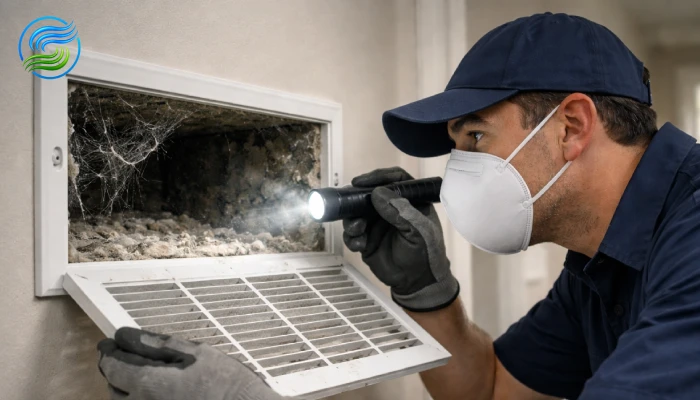
One close-up photo needs context. Ask which duct it shows and whether other areas have the same condition. Also ask which sections couldn’t be reached. A limited view should come with a clear explanation of its limits.
When cleaning is a reasonable option
I’d consider cleaning when the inspection finds material that should be removed and the ductwork is suitable for the proposed method. A dusty vent cover alone doesn’t settle that question. EPA explains that return grilles normally collect dust and that duct cleaning should be considered as needed.
Proper cleaning involves loosening deposits and collecting them. NADCA describes using agitation tools along with continuous negative pressure, meaning suction that draws loosened particles into collection equipment. The tools and access method need to suit the system.
Before approving that work, ask how the contractor will protect the duct material and close any access openings afterward. A tear or damaged lining needs assessment before cleaning proceeds.
The connected equipment matters, too. NADCA’s cleaning guidance includes the blower, coils, drain pan and other system components. A quote should explain which affected components are included. You can read more about those parts on our HVAC cleaning page.
When repair belongs in the conversation
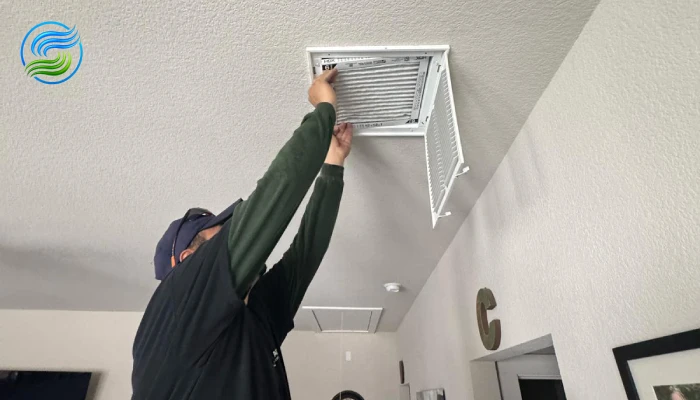
Cleaning doesn’t reconnect a loose duct or close an air leak. ENERGY STAR identifies holes, poor connections and kinked flexible ducts as problems that can affect comfort and duct performance.
If a room stays uncomfortable, I’d want the contractor to connect the complaint to the findings. Is there a disconnected run? Is flexible ductwork crushed or tangled? Does the system’s supply and return airflow need evaluation? ENERGY STAR recommends checking these conditions and evaluating airflow after repairs.
This is why I’d ask whether a targeted repair could solve the problem before considering a larger replacement. The answer depends on the damage and the condition of the surrounding material. Ask a qualified HVAC contractor to explain the repair option and what would make it unsuitable.
If you need both cleaning and repair, the estimate should separate them. That lets you see what each part of the work is meant to accomplish.
When replacement deserves a closer look
The material matters. Bare metal, flexible duct and ducts with an internal fiberglass lining need different assessments. I’d ask the inspector to identify the material before explaining whether it can be cleaned or repaired.
Wet or moldy duct insulation is a specific concern. EPA says affected insulation cannot be effectively cleaned and should be replaced. The moisture source also needs correction. A dark mark in a photograph alone doesn’t confirm mold; expert evaluation may be needed.
Physical damage also needs a clear explanation. Ask whether the inner duct surface is torn, whether a connection can be restored, and whether the damaged section can still do its job after a suitable repair. The contractor should explain why replacement is necessary for the particular section shown.
If full replacement is recommended, ask for evidence beyond one damaged area. Which additional runs are affected? What condition makes keeping them impractical? Is the recommendation about material damage, contamination, or the way the system distributes air?
Replacing a damaged section and redesigning a duct system are different scopes. ENERGY STAR recommends evaluating supply and return balance as part of duct improvement work. If the proposal changes the layout or duct sizes, ask the HVAC contractor to explain the design and how performance will be checked.
How I’d compare the quotes
I wouldn’t compare two totals until I understood what each covered. A cleaning quote and a replacement quote may address different parts of the system, different findings, or both.
- These are the questions I’d put beside each estimate:
- Which ducts or equipment components are included, and where are they located?
- What finding supports cleaning, repair or replacement for each area?
- What material and cleaning method, repair method or replacement product will be used?
- Are access, removal, disposal, reconnection and insulation included where needed?
- Who will perform the work, and what checks will document completion?
- What is excluded, and will extra work need my approval first?
For a replacement proposal, request photos or a simple layout with the affected sections labeled. For cleaning, request before-and-after views of the same areas. Clear records make it easier to check what was done and discuss anything that remains unresolved.
If the explanation still doesn’t match the evidence, I’d get another assessment before authorizing major work. You should be able to explain the reason for the job in your own words.
Does the age of the ducts decide it?
I treat age as useful background for the inspection. The findings still need to describe the material’s condition and whether the system works as intended. A recommendation needs more detail than ‘these ducts are old.’
Bring any records you have about earlier repairs, water problems or changes to the heating and cooling system. Those details help the inspector understand what to check and help you compare the new recommendation with past work.
Let’s start with what your system needs
At Supreme Air Austin, our air duct cleaning in Austin starts with an inspection. We check the supply and return ducts, the coil, air handler, plenum and filtration. That gives us a starting point for explaining the findings and the proposed cleaning work.
My advice is to bring your questions and ask to see the evidence. If a finding calls for an HVAC repair or replacement assessment, make sure that need is addressed before deciding on cleaning alone.
Call (512) 277-9782 or request an inspection. Tell our team what you’ve noticed and whether you already have a cleaning or replacement recommendation.