

Air duct cleaning after renovation can make sense when construction dust or debris has entered your HVAC system. It is not automatically needed after every project. For an Austin homeowner, the useful first step is an inspection that shows what is inside the system and whether cleaning is needed.
Before booking, find out whether the work affected only the room surfaces or also reached the ducts and equipment. That difference helps you ask for the right service and understand the quote.
How remodeling dust can get into your HVAC system
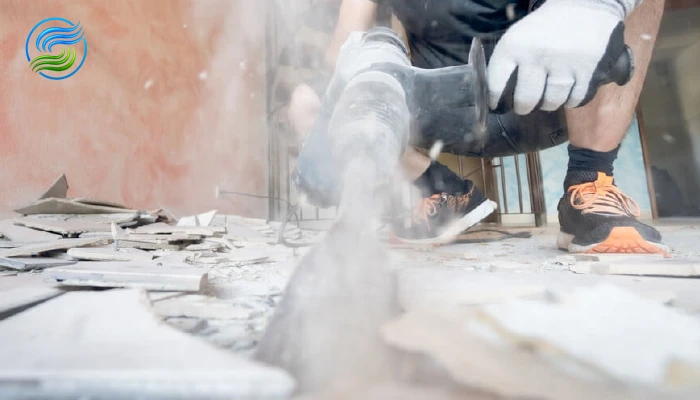
Removing drywall, sanding floors and cutting wood can produce dust. If the heating or cooling system runs during that work, a return vent can draw dusty room air toward the system. Open registers and exposed duct sections can also collect construction debris.
A return vent pulls room air back toward the equipment. Supply vents deliver heated or cooled air to the rooms. The filter catches some particles moving through it, but changing the filter does not remove material already sitting inside a duct.
A room can look clean without anyone having checked the HVAC system. Ask your remodeler whether the final cleanup included the inside of the ductwork. A clean floor or freshly wiped vent cover does not answer that question.
When should you ask for an inspection?
Tell the inspector if any of these situations apply:
- The HVAC system ran during demolition, sanding or other dusty work.
- Supply or return openings were left unprotected near the work area.
- Ducts were opened, moved or disconnected during the project.
- You can see debris inside an opening, or particles come out when the system runs.
These details help direct the inspection. They do not prove that every duct needs cleaning. Ask the technician to show you the affected areas and explain the recommendation. NADCA recommends inspecting before cleaning and keeping photographs and notes of the findings.
A dusty return grille by itself is not enough to diagnose a contaminated system. EPA notes that return grilles normally collect dust. It recommends considering cleaning in situations such as substantial debris buildup with particles being released through supply registers.
For example, a small repainting project with good dust control calls for a different assessment from a remodel that left debris in open ducts. The decision should follow the condition found.
When to schedule air duct cleaning after renovation
Plan the inspection with your remodeler before the last week of work. If cleaning is needed, a practical sequence is to finish the dust-producing work, remove construction debris from the rooms, and then complete the HVAC cleaning. Leave time for a final touch-up of the living space afterward.
Avoid scheduling a final duct cleaning while more demolition or sanding is still planned. Otherwise, the system may be exposed again. If work is happening in phases, ask the contractor how the cleaned system will be protected during the next phase.
For new or renovated HVAC systems, NADCA recommends verifying that the system is clean and protected before it operates. That is a condition to check, not a fixed waiting period after a remodel.
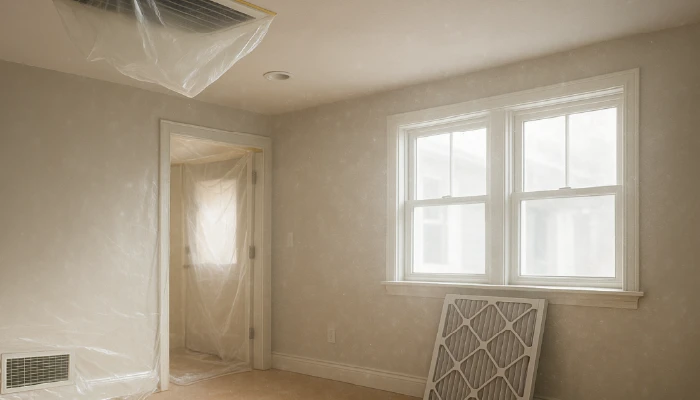
For future dusty work, discuss barriers, register protection and system shutdown with your contractor. Do not cover vents and then leave the equipment running against blocked openings. Arrange a suitable ventilation and temperature-control plan for the work.
What should the inspection cover?
Ask for a review of the air path, not just the front of a vent. The inspection should help connect the visible findings to the proposed work.
| Area | What to ask the technician to check |
| Supply and return ducts | Where debris is present, which runs are affected and how those areas can be reached. |
| Duct material and condition | Whether the system has flexible duct, metal or lined sections, and whether any part is damaged. |
| Filter and filter holder | Whether the filter needs replacement, fits correctly, or leaves gaps where unfiltered air can pass. |
| Blower and cooling coil | Whether dust reached the equipment, and whether component cleaning is needed. |
| Plenum and connections | The air-distribution box near the equipment, plus visible gaps, loose connections or moisture. |
If the findings involve equipment as well as ducts, ask how the proposed HVAC cleaning will address those components. Keep the required work and optional additions clear in the estimate.
Ask which areas could not be inspected. A useful report explains its limits as well as its findings. If old building materials may contain lead or asbestos, get the appropriate assessment before disturbing them.
What proper cleaning involves
The goal is to remove the material from the system. NADCA describes two parts of the process: loosening contamination from surfaces and collecting it. Professional equipment maintains negative pressure, meaning suction draws loosened particles toward the collection system.
Tools and access points should suit the duct material and its condition. Ask how the contractor will reach the affected areas, protect the ducts and close any service openings afterward. A vacuum connection alone does not describe the full scope of the job.
Cleaning should also address affected HVAC components. Leaving contaminated components untreated can allow the system to become dirty again. The quote should explain which components are included.
Ask why any chemical treatment is being proposed. A spray does not collect drywall dust or remove chunks of debris. NADCA treats chemical applications as a separate consideration after mechanical cleaning, when there is a demonstrated need.
What to ask before approving the price
Ask for a written scope that matches the inspection. A price described as per vent, per system or whole house can be hard to compare until you know what work it covers.
Get answers to these questions before approving the job:
- Which HVAC systems, supply ducts and returns are included?
- Does the price include the blower, coil and plenum if they need cleaning?
- Are access openings, their closure and cleanup included?
- Is filter replacement included, and which filter will be used?
- What findings could change the price, and will I approve extra work first?
- What photos or other documentation will I receive?
Explain whether the work was a single-room remodel, a large renovation or new construction. Also mention any attic access limits or ductwork changes. Those details help the contractor prepare an estimate, but they do not replace an inspection.
If your builder arranged the service, ask for the same scope and completion records. A general construction-cleanup invoice may not describe any work inside the HVAC system.
Problems that need a different solution
Paint and adhesive odors need attention to the products, their instructions and ventilation. Duct cleaning does not stop newly installed materials from releasing fumes. EPA recommends planning ventilation during remodeling and following manufacturers’ instructions.
Loose connections, disconnected ducts and other physical damage need a repair assessment. Removing dust will not reconnect a duct or close a gap. Moisture also needs its cause addressed; cleaning alone cannot fix an ongoing leak.
What to check when the work is finished
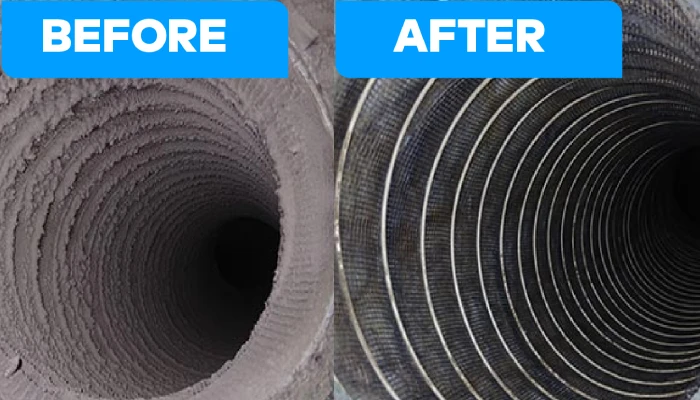
Ask to see the cleaned areas and compare them with the inspection photos. Matching before-and-after views are more useful than photographs of different parts of the system. Confirm which ducts and components were serviced and note anything that remains unresolved.
Check that registers are back in place, service openings are properly closed and the system operates after the work. Keep the scope, invoice and photographs together. EPA’s homeowner checklist includes these kinds of completion checks.
Questions homeowners ask
No. New systems can collect construction debris, but the condition should be checked. Ask the builder how the equipment and duct openings were protected and whether cleanliness was verified before operation.
A replacement filter may be needed, but it does not remove debris already inside the ductwork. Ask the inspector to separate the filter issue from any duct or equipment cleaning needs. If you need air filter replacement, confirm the correct size and type for your equipment.
Ask for an estimate after the scope is known. The number of systems, access and areas requiring work affect the schedule. Tell the contractor about your move-in date or remaining construction so those plans can be considered.
Schedule a post-renovation inspection in Austin
Tell Supreme Air Austin what was renovated, whether the HVAC ran during the work and what you have noticed since. Our air duct cleaning in Austin starts with an inspection so the recommendation and price reflect the system’s condition
Call (512) 277-9782 or request an inspection. We can review the findings with you and explain the proposed work before you decide.